
-Transforming STI Screening with a Tiered Multiplex Diagnostic Portfolio in Alignment with 2025–2026 WHO Guidelines
1. The Iceberg Beneath the Surface
This week, April 12–18, 2026, marks STI Awareness Week. The theme of this week serves as a powerful reminder: the global burden of sexually transmitted infections (STIs) remains profoundly underestimated. According to World Health Organization (WHO) estimates, there are more than 1 million new curable STI cases every day among people aged 15–49 years, amounting to over 374 million new cases annually. However, the full spectrum of STI pathogens extends far beyond the four classic curable infections (chlamydia, gonorrhoea, syphilis, and trichomoniasis). It encompasses a diverse array of bacteria (e.g., Mycoplasma genitalium, Ureaplasma species, Gardnerella vaginalis, Group B Streptococcus), viruses (herpes simplex virus types 1 and 2), protozoa (Trichomonas vaginalis), and fungi (Candida species) — many of which are not captured in traditional syndromic or single-pathogen testing paradigms.
The stealthy nature of asymptomatic infection remains a core challenge in global STI control. These silent infections not only insidiously progress to pelvic inflammatory disease, ectopic pregnancy, infertility, and adverse pregnancy outcomes, but also serve as persistent transmission reservoirs, fuelling the emergence of antimicrobial resistance — most critically for N. gonorrhoeae, for which ceftriaxone is now the last effective option in many countries.
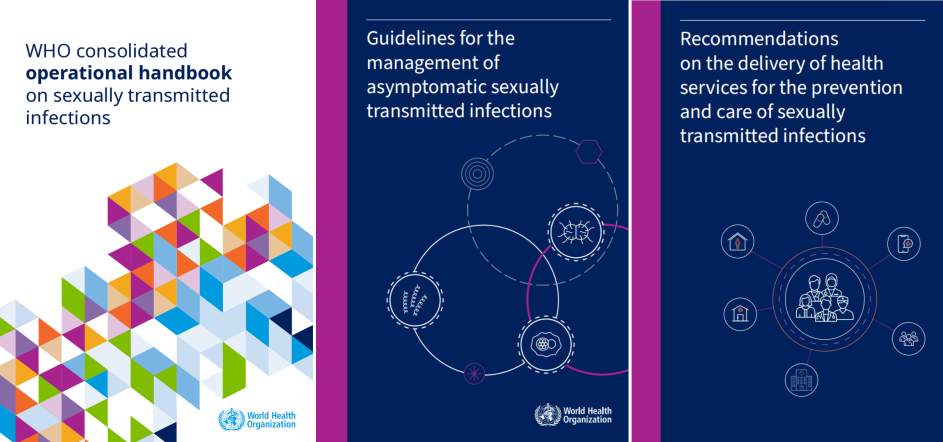
Against this backdrop, WHO released in July 2025 two landmark evidence-based guideline modules: the Guidelines for the Management of Asymptomatic Sexually Transmitted Infections[1] and the Recommendations on the Delivery of Health Services for STI Prevention and Care[2]. These were followed in February 2026 by the WHO Consolidated Operational Handbook on Sexually Transmitted Infections[3], which consolidates all existing normative guidance across the full STI prevention and care cascade. Additionally, the Overview of WHO recommendations on HIV and sexually transmitted infection testing, prevention, treatment, care and service delivery[4] provides a comprehensive synthesis of current guidance. Together, these documents signal a clear direction: expand nucleic acid amplification test (NAAT)-based STI screening coverage, particularly among asymptomatic populations, and adopt more efficient, accessible, and integrated testing strategies — including multiplex assays that cover a broad range of pathogens in a single test.
This article builds on the STI multiplex molecular diagnostic portfolio of Macro & Micro-Test Biotech Co., Ltd., aligned with the latest WHO evidence-based guidance. It systematically presents a tiered testing approach — from single-target detection, triplex, 9-plex, 14-plex, to 18-plex assays — and demonstrates how precise, flexible, and efficient strategies can address the screening needs of asymptomatic STIs across different clinical scenarios.
1. Core Evidence from the Latest WHO Guidelines and Implications for Diagnostic Technology
2.1 Evidence-Based Recommendations for Asymptomatic STI Screening
The Guidelines for the Management of Asymptomatic Sexually Transmitted Infections (July 2025)[1], developed using the GRADE methodology with systematic reviews and expert evaluations, focuses specifically on evidence-informed recommendations for screening N. gonorrhoeae and C. trachomatis. The guidelines explicitly recommend targeted screening in key populations where resources are available, including pregnant women, sexually active adolescents and young people aged 10–24, sex workers, and men who have sex with men (MSM). Screening frequency recommendations specify at least annual screening for sex workers and MSM, or every six months where feasible.

The release of these guidelines marks a paradigm shift in global STI strategy — from “symptom-driven” to “active screening.” As Dr Meg Doherty, Director of WHO’s Global HIV, Hepatitis and STIs Programmes, stated: “These new recommendations aim to close persistent policy and service gaps, especially for asymptomatic STIs, and help countries move faster toward the 2030 goals”[1].
2.2 Service Integration and the Global Consensus on Multiplex Testing
The concurrently released Recommendations on the Delivery of Health Services for STI Prevention and Care (July 2025)[2] promotes people-centred health services through four pillars: decentralization, integration, task sharing, and digital health. Notably, in September 2025, WHO announced the formation of a Guideline Development Group to develop the first-ever evidence-based global guidelines on multiplex testing, specifically addressing HIV, viral hepatitis, and STIs[5]. WHO defines multiplex testing as “a process that uses one sample and a single assay or platform to detect multiple infections at the same time” and notes that it is “a promising strategy to improve efficiency, expand testing coverage across diseases, and enhance cost-effectiveness”[5].
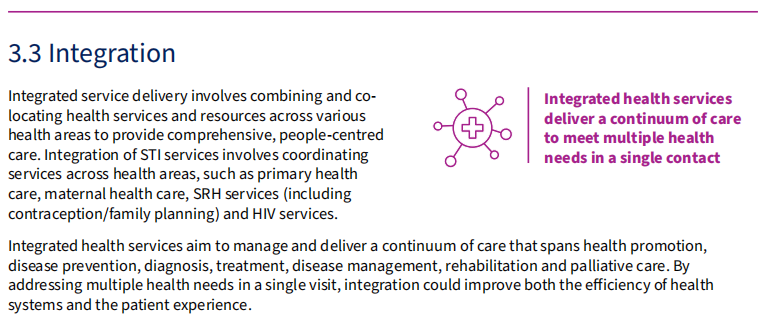
This signals that multiplex NAAT has evolved from a laboratory technique into a core tool for global public health strategy. In resource-limited settings, leveraging single-sample, single-run multi-pathogen screening will greatly enhance testing accessibility and cost-effectiveness — particularly suited to large-scale screening of asymptomatic populations and regular surveillance of high-risk groups.
2.3 The 2026 Consolidated Operational Handbook: A Strategic Mandate for Multiplex Testing
The WHO Consolidated Operational Handbook on STIs (February 2026)[3] provides an operational framework for integrating STI services across primary care, community, HIV, reproductive health, and maternal-child health platforms. For diagnostic strategy, three key mandates emerge:
Integration across platforms — requiring diagnostic tools that work reliably with multiple sample types (urine, urethral, cervical, vaginal swabs)
Sustainable financing — as countries shift from donor support to domestic budgets, cost-efficiency becomes critical. Multiplex NAAT reduces per-pathogen reagent cost, hands-on time, and turnaround time compared to multiple single-target assays, enabling expanded coverage without proportional infrastructure investment.
Antimicrobial stewardship — comprehensive pathogen identification supports targeted therapy over empirical treatment, a key strategy to slow N. gonorrhoeae antimicrobial resistance.
3. Macro & Micro-Test Tiered STI Screening Product Portfolio
3.1 Design Philosophy: From Single-Target Precision to Panoramic Coverage
Based on the evidence-based requirements for asymptomatic STI screening from WHO guidelines[1,2,4] and the global consensus on multiplex testing as a public health strategy[5], Macro & Micro-Test has built a tiered STI nucleic acid testing portfolio from single-target to ultra-broad-spectrum detection. All products utilize Fluorescence PCR or Enzymatic Probe Isothermal Amplification (EPIA) platforms, with sample types covering urine, male urethral swabs, female cervical swabs, and vaginal swabs, accommodating diverse clinical scenarios and population screening needs.
|
Panel |
Target Range |
Sample Types |
LoD |
Clinical Application |
|
Single-Target |
Single pathogen | Swabs / urine |
400–1000 copies/mL |
Symptomatic suspected infection, treatment monitoring |
|
Triplex |
3 common pathogen combinations | Swabs / urine |
400–1000 copies/mL |
Routine STI screening, early pregnancy screening |
|
7-Plex |
NG, CT, UU, HSV1, HSV2, Mh, Mg | Swabs / urine |
400–1000 copies/mL |
Comprehensive screening for polymicrobial infections in general and high-risk populations |
|
9-Plex |
CT, NG, Mh, HSV1, UU, HSV2, UP, MG, TV | Swabs / urine |
400–1000 copies/mL |
Comprehensive screening for polymicrobial infections in general and high-risk populations |
|
14-Plex |
CT, MG, MH, HSV1, HSV2, UU, UP, MG, CA, GV, TV, GBS, HD, TP | Swabs / urine |
400–1000 copies/mL |
Comprehensive screening for polymicrobial infections in general and high-risk populations |
|
18-Plex |
CT, NG, Mh, HSV1, UU, HSV2, UP, MG, CA, GV, TV, GBS, HD, TP, CKR, CG, CPA ,CTR | Swabs / urine |
400–1000 copies/mL |
Ultra-comprehensive for polymicrobial infections in general, etiological investigation for complex, recurrent, or refractory cases; research and epidemiology |
3.2 Single-Target Detection: Precise Localization and Definitive Diagnosis
For individuals presenting with clear clinical symptoms or those with preliminary screening results suggestive of a specific pathogen, single-target NAAT offers the most precise and economic means of confirmation. Macro & Micro-Test provides single-target kits covering all major STI pathogens, including CT, NG, UU, Mh, MG, TV, HSV1/2, TP, and Candida species, with analytical sensitivity as low as 50 copies/reaction (e.g., HWTS-UR007 HSV-2 detection kit), delivering high specificity that provides clear etiological evidence to guide precise treatment and partner management.
Clinical positioning: Confirmation of symptomatic suspected STI infections; molecular monitoring of antibiotic efficacy; targeted testing following specific high-risk exposures.
3.3 Triplex Testing: The First-Line Choice for Basic Screening
Triplex products serve actively for the routine STI screening. Informed by the 2025 WHO guidelines‘ particular emphasis on CT and NG screening[1] and considering regional epidemiological profiles, Macro & Micro-Test has developed several triplex combinations:
-HWTS-UR019 (CT + UU + NG) : Covers the highest-incidence bacterial STI combination globally; -HWTS-UR043 (CT + UU + MG) : With Mycoplasma genitalium (MG), which has become a clinical priority due to emerging resistance.
-HWTS-UR044 (Mh + UU + GV) : For common pathogens associated with bacterial vaginosis and mixed vaginal infections.
-HWTS-UR041 (CT + NG + TV) : Covers common combinations of bacterial and protozoal STIs.
Clinical positioning: Routine STI health screening and early pregnancy screening (to prevent mother-to-child transmission); annual or semi-annual basic screening for high-risk populations (adolescents, MSM, sex workers).
3.4 7-Plex and 9-Plex Testing: Advanced Options for Comprehensive Screening
When clinical risk assessment suggests the possibility of multiple concurrent infections or a need for more thorough evaluation of high-risk populations, 7-plex and 9-plex products provide higher detection coverage.
-HWTS-UR012 (7-Plex) : Targets NG, CT, UU, HSV1, HSV2, Mh, and Mg, covering common bacterial, viral, and mycoplasmal STI pathogens. LoD: 400 copies/mL for all except Mh (1000 copies/mL).
-HWTS-UR048 (9-Plex) : Detects CT, NG, Mh, HSV1, UU, HSV2, UP, MG, and TV, 9 pathogens covering gonococcus, chlamydia, mycoplasmas (including Ureaplasma parvum), herpes simplex virus, and Trichomonas vaginalis, representing one of the most comprehensive panels in its class.
Clinical positioning: Comprehensive STI screening for routine clinical use in general populations, including symptomatic and asymptomatic individuals; pre-conception and pregnancy screening; and secondary evaluation when initial targeted testing yields negative results despite persistent clinical suspicion.
3.5 14-Plex Testing: Broad-Spectrum Screening That Misses No “Silent” Pathogen
The 14-Plex product represents the technological realization of the “active screening” concept advocated by WHO guidelines[1,2]. HWTS-UR040 simultaneously detects 14 genitourinary tract pathogens: CT, NG, Mh, HSV1, HSV2, UU, UP, MG, CA, GV, TV, GBS, HD, and TP. This panel covers:
-Bacteria: CT, NG, GV, GBS (Group B Streptococcus, a focus in pregnancy)
-Mycoplasmas: Mh, UU, UP, MG (all four common mycoplasma species)
-Viruses: HSV1, HSV2, HD
-Protozoa: TV (Trichomonas vaginalis)
-Spirochetes: TP (Treponema pallidum, syphilis)
This panel closely approximates the ideal “single sample, comprehensive investigation” screening model, particularly suited for systematic etiological investigation when clear symptoms or infection sites are lacking.
Clinical positioning: Chronic unexplained genitourinary discomfort; recurrent STI infections; infertility-related genitourinary infection screening; special population epidemiological investigations.
3.6 18-Plex Testing: Ultra-Broad-Spectrum “Gold Standard”
HWTS-UR052 is Macro & Micro-Test‘s most comprehensive STI multiplex detection panel to date, simultaneously detecting 18 genitourinary tract infection pathogens: CT, NG, Mh, HSV1, UU, HSV2, UP, MG, CA, GV, TV, GBS, HD, TP, CKR, CG, CPA, and CTR. Building on the 14-Plex panel, this offering expands coverage to an even broader pathogen spectrum, including:
-Chlamydia trachomatis related: CKR, CG, CTR (chlamydial typing and related pathogens)
-Candida species: CA (Candida albicans) — the most common opportunistic fungal pathogen of the female genital tract
Expanded bacterial coverage: Including Gardnerella vaginalis and Group B Streptococcus
Clinical positioning: Ultra-comprehensive investigation of complex genitourinary infections; research and epidemiological surveillance; challenging cases with negative findings after standard panel screening; deep STI screening at premium health check-up centers.
4.Answering WHO’s Call to Build a New STI Prevention and Control Frontier
The 2025–2026 WHO guidelines call for expanded asymptomatic screening, service integration, and multiplex testing. Macro & Micro-Test’s STI multiplex molecular testing product matrix, with its tiered design from single-target to 18-plex detection, is a direct response to this global health strategy. Whether the routine triplex screening performed in primary healthcare facilities or the deep-dive investigations based on 14-plex or 18-plex assays at tertiary hospitals and CDC laboratories, our products deliver high sensitivity (400 copies/mL minimum), high throughput, and high specificity.
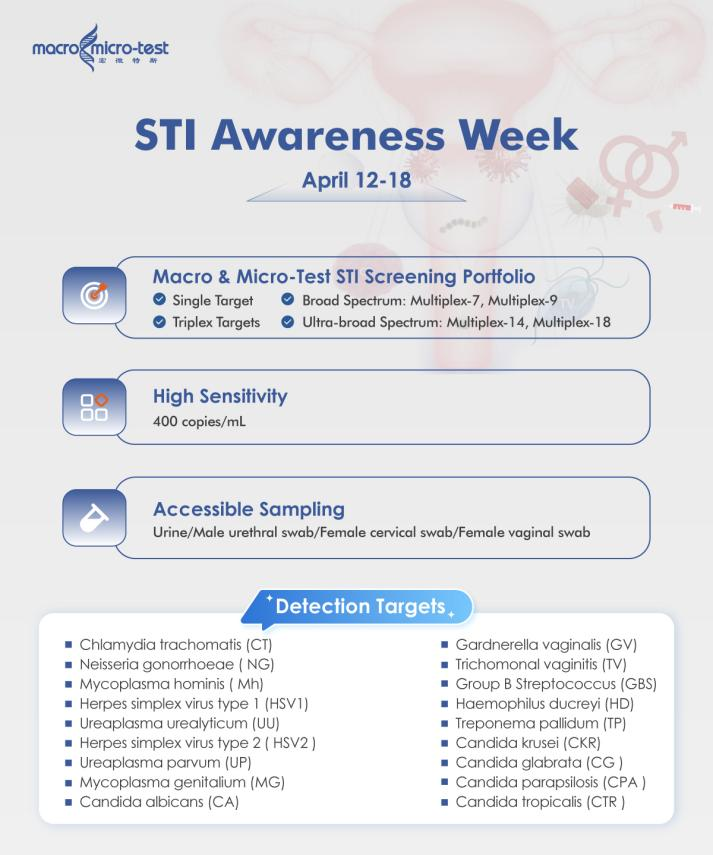
On STI Awareness Week 2026 (April 12–18), Macro & Micro-Test reaffirms its commitment to supporting comprehensive STI screening and enabling healthcare institutions to adopt NAAT-based multiplex strategies — advancing together toward the WHO 2030 goals of reducing new cases of syphilis, gonorrhoea, chlamydia and trichomoniasis, and ending the STI epidemic.
Silence is not safety — Macro & Micro-Test gives a voice to silent infections.
For further information: marketing@mmtest.com
References
[1] World Health Organization. Guidelines for the management of asymptomatic sexually transmitted infections. Geneva: World Health Organization; 2025.
[2] World Health Organization. Recommendations on the delivery of health services for the prevention and care of sexually transmitted infections. Geneva: World Health Organization; 2025.
[3] World Health Organization. WHO consolidated operational handbook on sexually transmitted infections. Geneva: World Health Organization; 2026.
[4] World Health Organization. Overview of WHO recommendations on HIV and sexually transmitted infection testing, prevention, treatment, care and service delivery. Geneva: World Health Organization; 2025.
[5] World Health Organization. WHO announces the development of guidelines on multiplex testing. Geneva: World Health Organization; 2025.
Post time: Apr-13-2026