
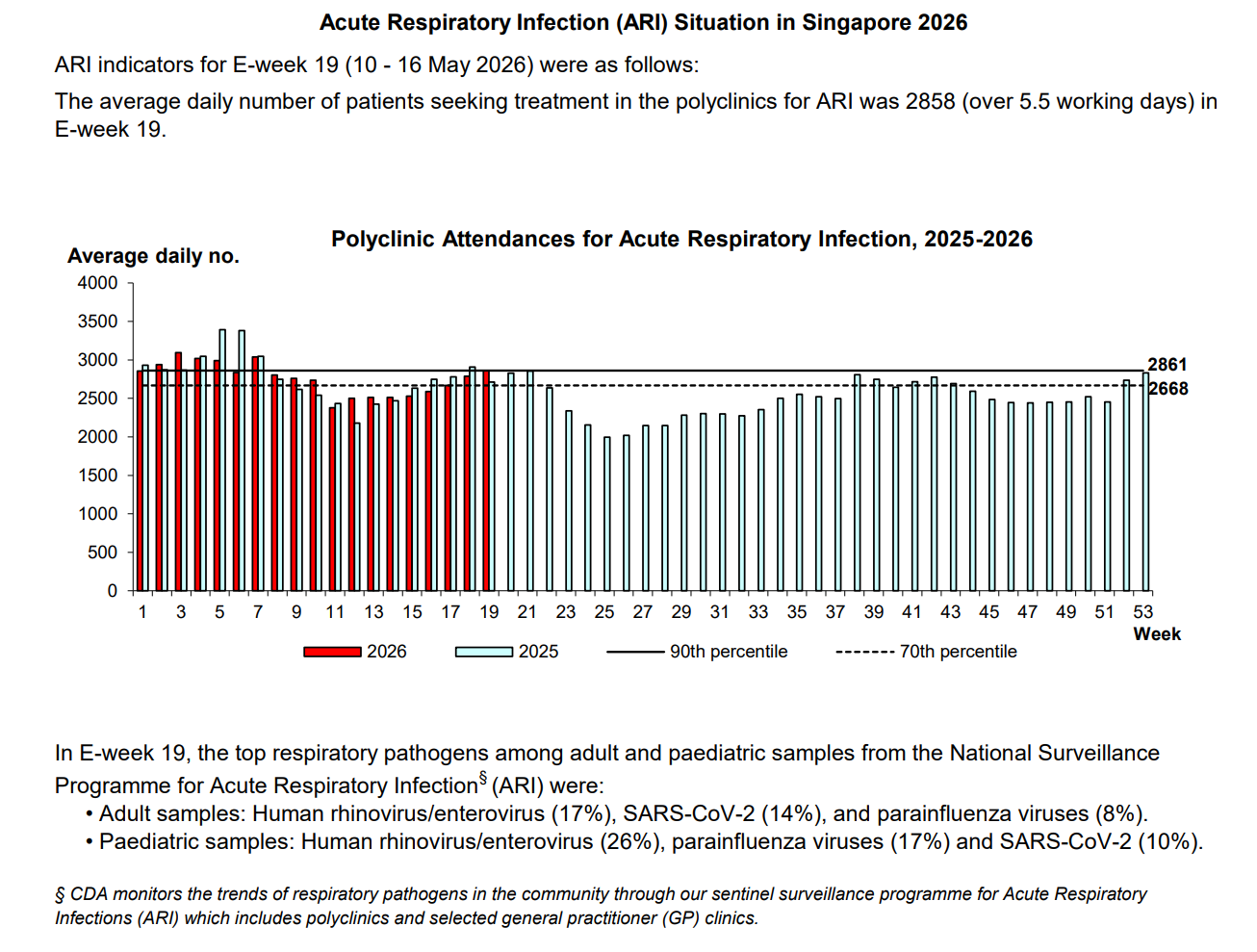
Singapore is seeing a sharp rise in COVID-19 infections again. According to the Communicable Diseases Agency (CDA), an estimated 12,700 new cases were recorded during the week of May 10–16 – an increase of 4,700 from the previous week.
While severe cases remain low (around one ICU patient per day), the sheer volume of infections is putting renewed pressure on the healthcare system. The dominant strain is NB.1.8.1, accounting for more than half of locally sequenced cases. Officials note that existing vaccines still provide protection, and there is no evidence that the circulating variants cause more severe illness.
But there’s another challenge: COVID-19 is not alone.
More Respiratory Viruses Are Also Spreading
Surveillance data show that influenza positivity is holding steady at around 10%, while other respiratory pathogens – including RSV, adenovirus, rhinovirus, and enterovirus – are also actively circulating in the community. For a patient presenting with fever, cough, and sore throat, it could be any one of these.
This makes symptom-based diagnosis unreliable. COVID-19, influenza, and RSV require different treatment approaches – different antivirals for COVID-19 and flu, versus mainly supportive care for RSV – and their isolation requirements also vary. The only way to know for sure is through testing – and ideally, testing that covers multiple pathogens at once.
Why Multiplex Testing Matters Now More Than Ever
With multiple viruses circulating simultaneously – and real spillover risk to neighbouring countries through cross-border travel – single-target tests are no longer sufficient. Healthcare providers need solutions that can quickly distinguish between COVID-19, flu, RSV, and adenovirus and more, whether in a busy fever clinic, a primary care setting, or a central laboratory.
Macro & Micro-Test, specialized in respiratory pathogen detection, offers a comprehensive portfolio covering the most common respiratory infections.
Rapid Antigen Tests – Results in 15–20 Minutes
Macro & Micro-Test’s CE-approved RDTs require no equipment, making them ideal for point-of-care screeing and triage with high sensitivity and excellent specificity for all targets.
-HWTS-RT0631 is a 5-in-1 test that detects SARS-CoV-2, Influenza A, Influenza B, RSV, and adenovirus from a single swab.
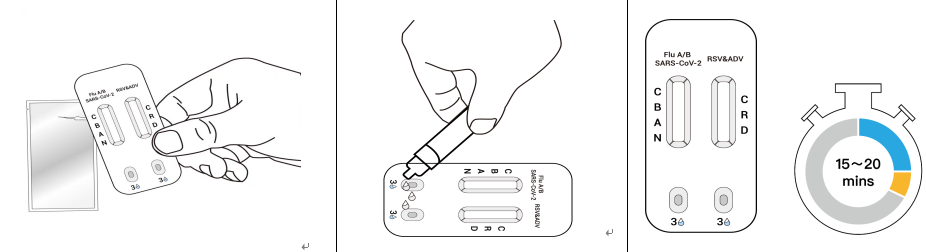
-HWTS-RT098 is a 3-in-1 COVID-19 + Influenza A/B, achieving 100% specificity for influenza types.
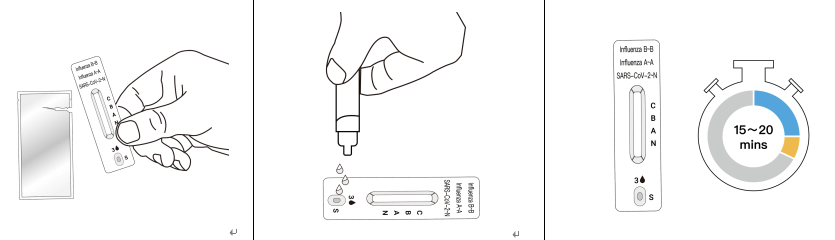
Both are easy to use, cost-effective, and well-suited for fever clinics, schools, and border health checkpoints.
PCR Tests – Gold Standard Sensitivity for Confirmation
For confirmatory diagnosis and surveillance, Macro & Micro-Test’s PCR kits offer ultra-high sensitivity with a limit of detection (LOD) of 200 copies/mL, supporting nasopharyngeal and oropharyngeal swabs.
HWTS-RT060-A triplex real-time PCR kit for the simultaneous detection of SARS-CoV-2, Influenza A, and Influenza B.
HWTS-RT177-A six-plex real-time PCR kit covering RSV, adenovirus, human metapneumovirus (hMPV), rhinovirus, parainfluenza virus (types I/II/III), and Mycoplasma pneumoniae.
-Ambient-temperature transport – Lyophilized reagents eliminate cold-chain dependency, a practical advantage for labs with limited cold-chain capacity
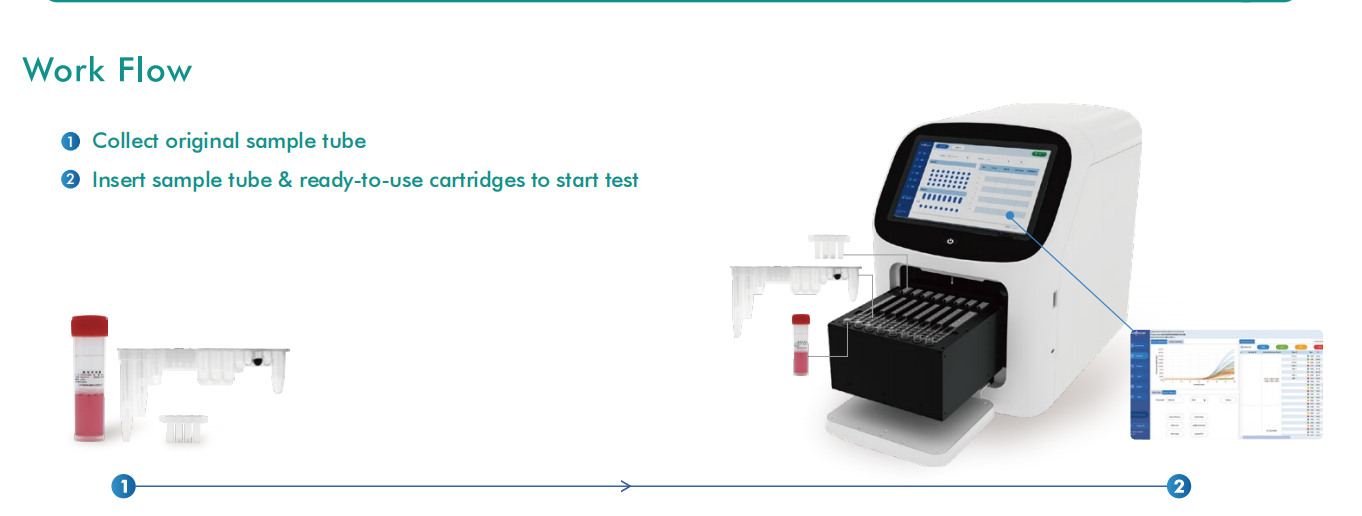
-Platform compatibility – Works with mainstream PCR platforms, including the fully automated Sample-to-Answer AIO 800 POCT system
From Symptom to Certainty
COVID-19 hasn’t gone away, and influenza, RSV, and other respiratory viruses are back in full force. Relying on symptoms alone is not enough. Multiplex testing – whether rapid or PCR-based – is becoming a practical necessity for clinics, hospitals, and public health labs.
With its deep expertise in respiratory diagnostics, Macro & Micro-Test provides a flexible, ready-to-deploy solution that covers everything from point-of-care screening to laboratory confirmation.
Post time: May-25-2026