
From Pathogen Identification to a Broader Molecular Picture
Fungal infections can be difficult to diagnose. Clinical manifestations are often nonspecific, while conventional culture may require time to provide actionable microbiological information. In critically ill or immunocompromised patients, the diagnostic challenge can become even greater.
This year’s Fungal Disease Awareness Week (September 14–18, 2026) marks the 10th annual campaign, with the theme “Fungal Diseases Start Where Life Happens.” Fungal exposures occur where people live, work, travel, and receive care. FDAW 2026 highlights antifungal resistance as a major challenge to treatment, alongside improving early detection and diagnostic capabilities worldwide.
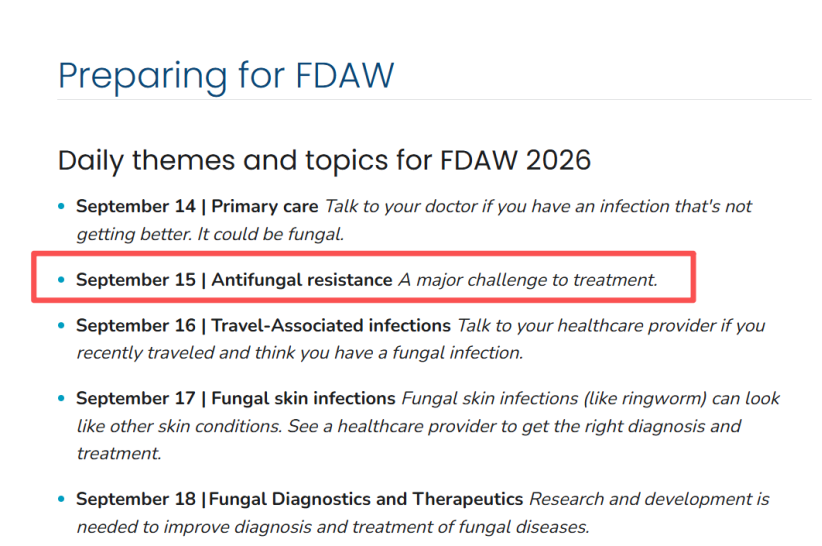
At the same time, fungal infections do not always occur in isolation. Fungal and bacterial pathogens may present with overlapping clinical features, while emerging antifungal resistance adds another layer of complexity.
This raises an important question: When the differential diagnosis is broad, can we obtain a broader molecular picture within a single testing workflow?
From Single-Pathogen Testing to Multiplex Detection
In complex infections, the potential pathogen spectrum can be broad. A workflow based on testing one suspected organism at a time may therefore require multiple assays and sequential investigations.
Multiplex molecular testing offers another approach: investigate multiple clinically relevant targets within one molecular workflow.
This can be particularly useful when fungal and bacterial infections may overlap, when multiple pathogens are part of the differential diagnosis, or when resistance-associated molecular information is relevant to the diagnostic assessment.
One Test, 32 Targets: 32-Plex Fungal Nucleic Acid Detection Kit
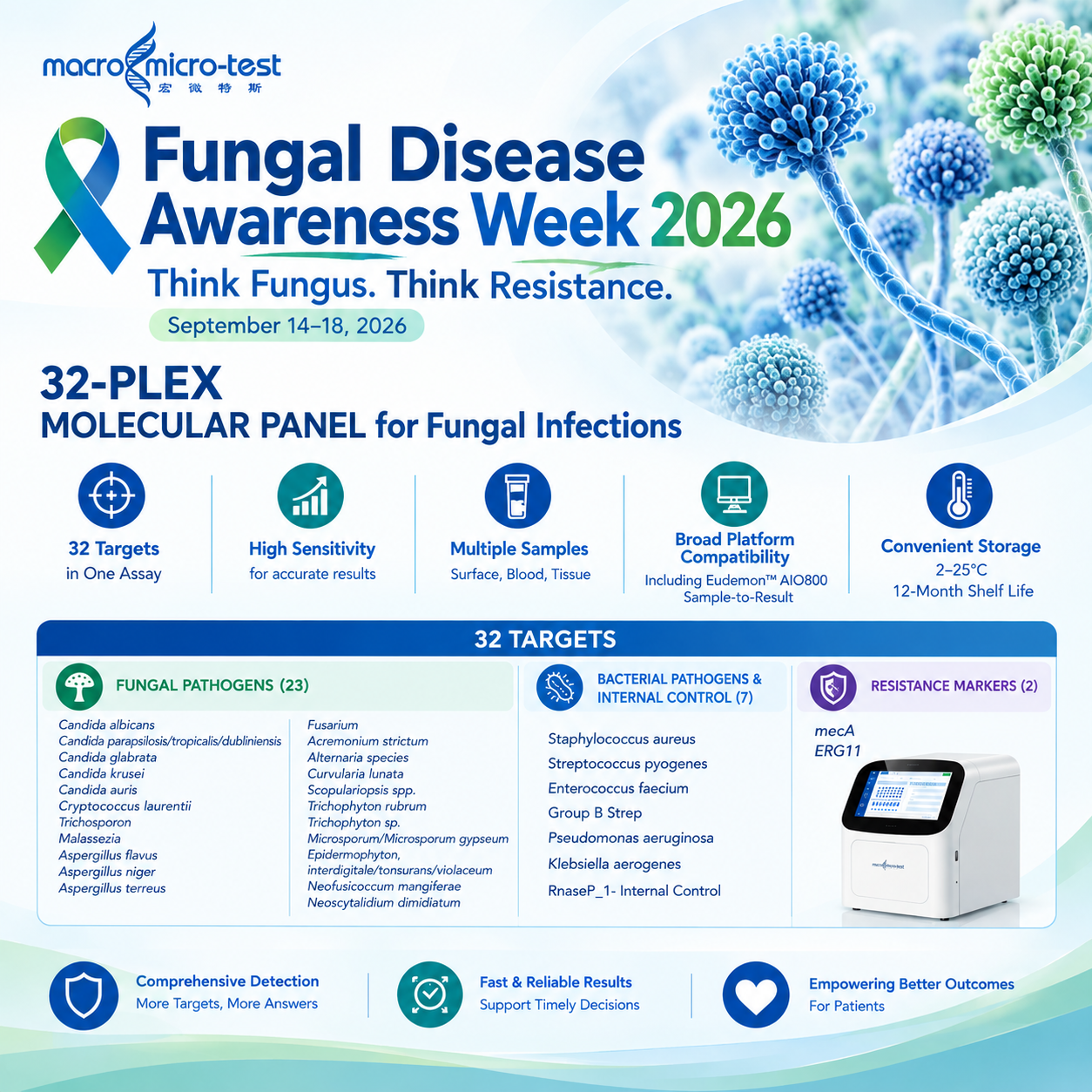
The Macro & Micro-Test 32-Plex Fungal Nucleic Acid Detection Kit is a multiplex real-time PCR assay designed to simultaneously investigate fungal pathogens, selected bacterial pathogens, and resistance-associated molecular targets within a single test.
Broad Fungal Coverage
Multiple fungal pathogens can be investigated simultaneously, supporting a broader molecular assessment rather than a single-target approach.
Integrated Bacterial Detection
Selected bacterial targets are included to help address situations where bacterial and fungal infections may present with overlapping clinical features.
Resistance-Associated Molecular Targets
The panel includes ERG11 and mecA, providing molecular information associated with antifungal and antibacterial resistance mechanisms. These molecular targets are intended to complement, rather than replace, phenotypic susceptibility testing and other microbiological methods.
Designed for Comprehensive Molecular Testing
-Multiple specimen types: Surface samples, whole blood, and tissue homogenates
-Broad platform compatibility: Validated on major real-time PCR systems, including the Sample-to-Answer Eudemon™ AIO800
-Practical laboratory use: Stable at 2–25°C with a 12-month shelf life
By combining fungal pathogens, selected bacterial pathogens, and resistance-associated molecular targets in one multiplex assay, the panel can help laboratories obtain a broader molecular view when the differential diagnosis is complex.
Why a Broader Molecular Picture Matters
Fungal diagnosis is rarely based on a single test. Culture remains essential when organism recovery, species confirmation, or susceptibility testing is required. But fungal infections frequently mimic bacterial or viral illnesses, making early recognition and prompt diagnostic testing vital.
That is where molecular testing adds another layer of information. By investigating multiple targets within one workflow, the Macro & Micro-Test 32-Plex Fungal Nucleic Acid Detection Kit helps laboratories move beyond a narrow single-pathogen question toward a broader assessment of clinically relevant microorganisms—complementing, not replacing, clinical assessment, conventional microbiology, and susceptibility testing.
The value is not simply more targets. It is more relevant information within one integrated workflow.
More targets. One workflow. A broader molecular picture.
Macro & Micro-Test—Precise Diagnosis Shapes a Better Life
Post time: Sep-17-2026