
—-“MRSA remains a major threat. Patient carriage fuels transmission. Control requires not only strategy – but speed and precision at the front line.”
The Persistent Threat of MRSA
Today, MRSA remains one of the leading causes of hospital-acquired infections. In her keynote at ESCMID Global 2026, Professor Susan Huang of UC Irvine presented sobering data: in the United States alone, approximately 120,000 S. aureus bloodstream infections occur each year, with about 20,000 deaths directly linked to these infections. MRSA ranks among the top causes of surgical site infections, pneumonia, and bloodstream infections, and it continues to be the leading cause of hospital-acquired infections (HAI) in children.

What makes MRSA particularly difficult to control is its ease of transmission. Even a routine patient-provider interaction can contaminate healthcare workers, regardless of their role or setting. Once a patient becomes colonized with MRSA, the carrier state can persist for months or even years, facilitating spread across the healthcare network. One study cited by Professor Huang found that 10–14% of patients with an MRSA acquisition event develop a severe infection within one year after hospital discharge.
Three Current Control Strategies: Relent, Target, Expand
Professor Huang organized current hospital MRSA control strategies into three models:
1. Relent – Systematic basic measures, limited control
This strategy shifts the focus from “eradication” to scalable hospital-wide interventions, including hand hygiene, antiseptic skin cleansing, and device-associated infection prevention bundles. With strong surveillance support, MRSA infection rates can be stabilized. However, the effect is limited, and most of the infection burden remains outside the hospital walls.
2. Target – Active screening + decolonization for precise intervention
This approach emphasizes identifying carriers through active surveillance to enable early intervention – particularly decolonization therapy. Since most MRSA infections originate from a patient’s own nasal strain, targeted decolonization can significantly reduce infection risk. It has proven effective in both surgical populations and post-discharge patients. The benefit is clear, but this strategy requires sustained resources.
3. Expand – Broad coverage for multiple benefits
The Expand strategy recognizes that patients often carry multiple pathogens simultaneously, making a single-pathogen approach inefficient. Horizontal interventions such as antiseptic skin cleansing (with or without nasal agents) can reduce the burden of MRSA and other pathogens at the same time. Large trials have shown that this strategy is the most effective in reducing MRSA and bloodstream infections, while also providing protection by reducing patients‘ overall microbial load.
Bridging Strategy and Execution: The Role of Rapid, Accessible Testing
All three strategies – Relent, Target, and Expand – share a common prerequisite: timely and accurate identification of MRSA colonization or infection. Without rapid detection:
-Relent lacks real-time feedback to adjust basic measures.
-Target cannot efficiently screen and decolonize without fast turnaround.
-Expand benefits from knowing baseline carriage to monitor impact.
This is where Macro & Micro-Test’s AIO800 fully automated POCT platform + SA & MRSA nucleic acid detection kit provide an essential bridge between academic strategy and clinical reality.
Macro & Micro-Test’s Solution: Enabling Each Strategy with Core features
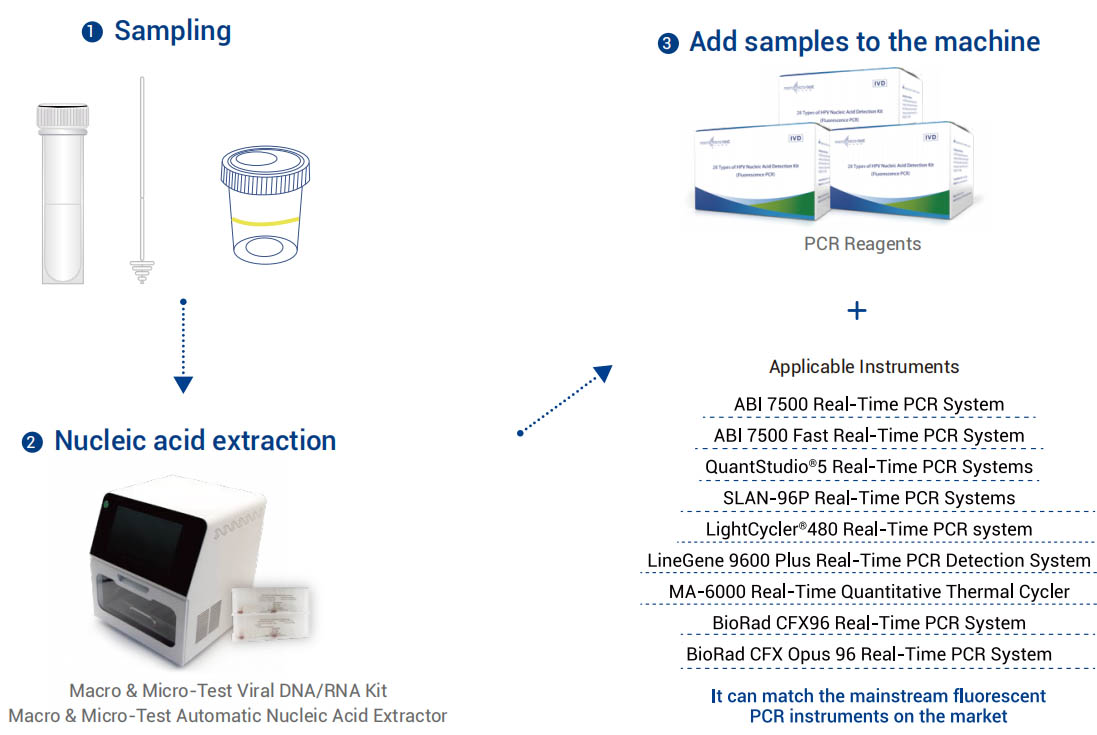
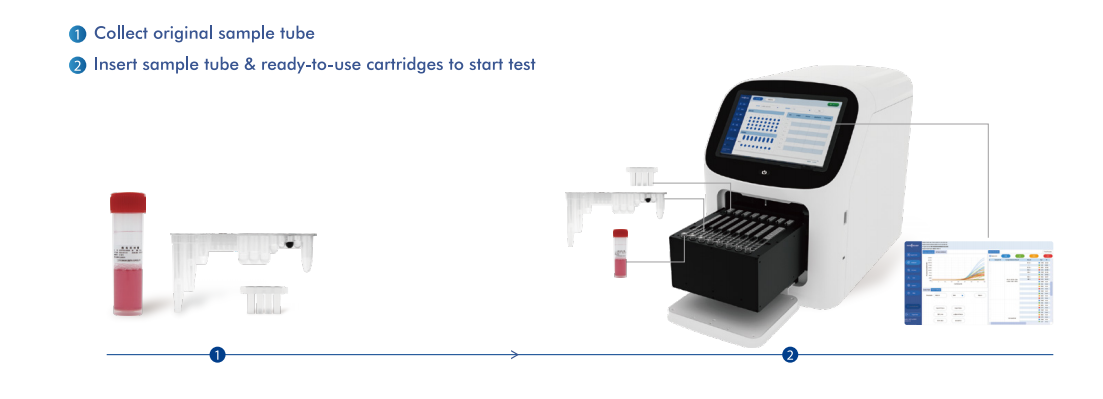
-Targets: nuc gene (specific to S. aureus) + mecA gene (methicillin resistance)
-Results in 30–60 minutes (vs. 2–3 days for culture)
-Sample types: sputum, nasal swabs, skin/soft tissue samples
-Direct loading from original tubes (1.5–12 mL); minimal hands-on time
-Dual reagent formats (liquid & lyophilized) for flexible storage/transport
-11-layer contamination control (UV, HEPA, paraffin sealing, etc.)
-Certifications: IVDR, NMPA, FDA, MDA
How it supports each strategy:
| Strategy | Contribution of AIO800 + SA/MRSA Kit |
| Relent | Enables rapid spot-checking of high-risk wards or outbreak investigations, feeding data into basic infection control measures. |
| Target | Makes active screening logistically feasible and cost-effective. Rapid results allow immediate decolonization – turning the “screen-and-treat” loop from a research ideal into daily practice. |
| Expand | Provides a fast, low-barrier tool to assess colonization rates across broad populations, helping hospitals monitor the impact of horizontal interventions (e.g., chlorhexidine bathing) on MRSA burden. |
Beyond the hospital walls
Professor Huang‘s newly funded multi million dollar project reflects a broader and growing trend in infection prevention: extending MRSA control beyond hospital, with a focus on post discharge carriers. The AIO800’s compact, automated design is very much aligned with this same philosophy. The platform is well suited to support the shift toward decentralized testing – enabling rapid, easy to use MRSA detection in outpatient clinics, community health centers, and potentially home care settings, exactly where the future of infection prevention is heading.
From Strategy to Solution
Professor Susan Huang has given the global infection control community a clear strategic framework: Relent, Target, and Expand. But a strategy without execution tools remains an aspiration only. Macro & Micro-Test’s AIO800 POCT platform and SA & MRSA detection kit deliver the speed, simplicity, and accessibility needed to turn these strategies into daily reality – in ICUs, general wards, and eventually beyond the hospital.
Post time: May-19-2026