
On May 28, 2026, the world will mark the 39th International Day of Action for Women’s Health. This year’s theme rings loud and clear:
“Essential, Not Optional: Strengthening Health Systems to Uphold Health Rights and SRHRJ in Times of Polycrisis.”
This is no empty slogan. In an era of overlapping crises – climate upheaval, economic downturn, geopolitical conflict, and public health emergencies – women’s health services, especially sexual and reproductive health services, are often the first to be cut and the easiest to be seen as “optional.” But the lived experiences of countless women tell us one thing: the bottom line of health is never a luxury – it is a fundamental human right.
When we talk about “strengthening health systems,” what exactly do we mean? More hospital beds? Cheaper medicines? More equitable access to services? There is one critical dimension that cannot be ignored: diagnostic capacity. Without accurate testing, there is no real prevention. Without timely screening, there is no equal access to health.
The Silent Epidemic: STIs – The Overlooked “Second Crack” in Women’s Health
Under the shadow of polycrisis, sexually transmitted infections (STIs) are spreading at an alarming rate, yet they rarely make headlines. They are often asymptomatic – countless carriers spread pathogens unknowingly, only to regret years later when infertility, pelvic inflammatory disease, neurological damage, cervical cancer, or even increased HIV risk become reality.
For women, the toll of STIs is particularly harsh:
High-risk HPV is a leading cause of cervical cancer. Pathogens such as Chlamydia trachomatis, Neisseria gonorrhoeae, Mycoplasma genitalium, herpes simplex virus, Treponema pallidum, Trichomonas vaginalis, and various Candida species can quietly erode reproductive health, leading to infertility, pelvic inflammatory disease, pregnancy complications, and increased HIV risk.
This is precisely the reality that the “Essential, Not Optional” theme confronts: even in times of polycrisis and resource constraints, STI screening must never be optional – it must be part of standard care.
Precision Diagnosis: Making “Essential” Truly Accessible
Slogans need action. Concepts need tools. To truly strengthen health systems and defend women’s health rights, we need diagnostic solutions that are accurate, efficient, and easy to use.
That is the mission of Macro & Micro-Test.
HPV Detection Kit: More Than Screening – It Distinguishes
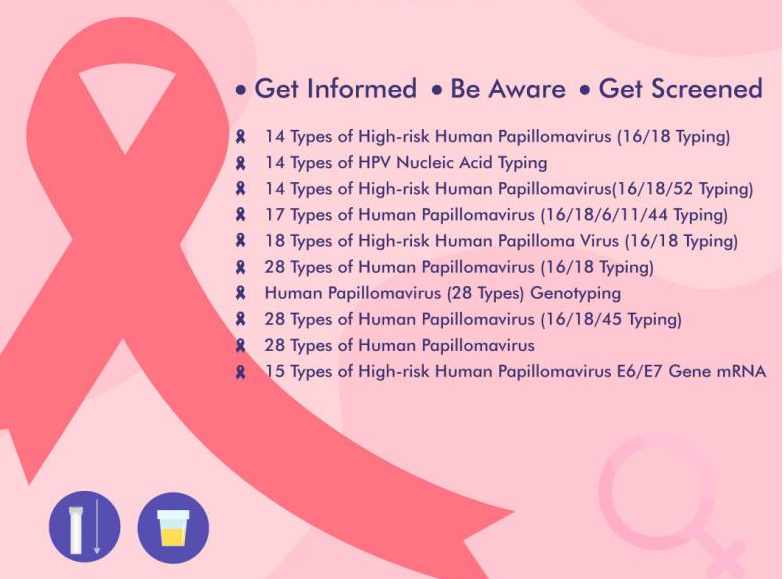
Ultra-high sensitivity: Detection limit as low as 300 copies/mL – captures even early infections with extremely low viral load.
-Flexible formats: Available in liquid and lyophilized forms to suit different transport and storage needs.
-Patient-friendly sampling: Supports both swab and urine samples, reducing discomfort and increasing screening uptake.
-Comprehensive genotyping: Covers 28 HPV DNA genotypes (high-risk and low-risk) and 15 HR-HPV mRNA for precise risk identification.
-Open system: Compatible with mainstream PCR platforms and Sample-to-Answer AIO800 System.
STI 18-Plex Detection Kit: One Test, Full Coverage
Based on a deep understanding of women’s health rights, we introduce the STI 18-Plex Detection Kit – one sample, one run, simultaneously detecting the 18 most common urogenital pathogens in women, covering bacteria, viruses, fungi, and protozoa.
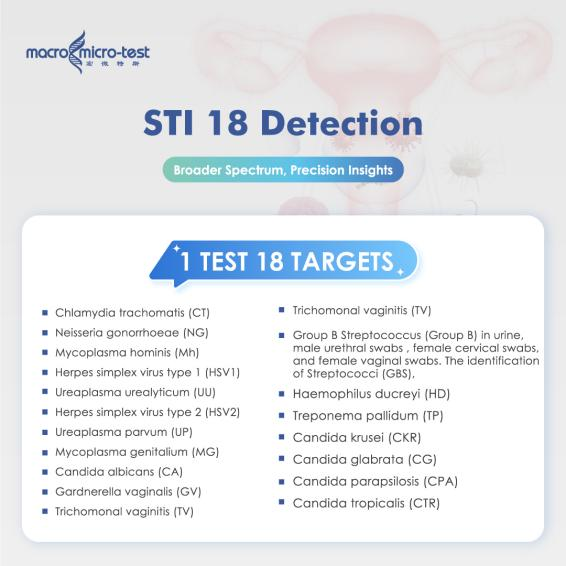
-One test, no need for sequential exclusion: Eliminates multiple sampling and waiting, reducing time, financial and psychological burden.
-Dual sample compatibility: Swab or urine – adaptable to different settings and populations.
-High sensitivity, low miss rate: Ensuring no pathogen goes undetected, making results truly reliable.
-STI Plex-14, Plex-9, Plex-7 and STI Triple available for option.
Early Detection Is Prevention – Precision Diagnosis Is Empowerment
Early detection is prevention – preventing cancer, infertility, and suffering.
Precision diagnosis is empowerment – giving women truthful information about their own bodies, enabling them to make decisions with knowledge and autonomy.
Take Action: Make “Essential” the Default Setting of Every Health System
On the International Day of Action for Women’s Health 2026, we call upon:
Policymakers: Integrate comprehensive HPV and STI screening into essential health service packages, ensuring it is not cut or reduced during crises.
Healthcare institutions and laboratories: Adopt high-sensitivity, multi-pathogen joint testing technologies to reduce missed diagnoses and improve efficiency.
Every woman who cares about her own health: Break the silence and stigma, seek information, and decide for yourself – because prevention that centers on you respects your life far more than passive treatment ever can.
Macro & Micro-Test stands with global partners to bring “Essential, Not Optional” from words into every clinic, every sample collection, every test report – through innovative molecular diagnostic solutions.
Contact us to jointly defend women’s health rights: marketing@mmtest.com
Post time: May-28-2026