
Clostridioides difficile remains one of the most important causes of healthcare-associated infectious diarrhea worldwide. The burden is particularly significant among elderly patients, hospitalized individuals, residents of long-term care facilities, and patients receiving broad-spectrum antibiotics.
Yet diagnosing C. difficile infection (CDI) presents a unique challenge.
Unlike many gastrointestinal pathogens, C. difficile is an opportunistic pathogen that may colonize the intestinal tract without causing disease. Asymptomatic carriage is frequently observed in healthcare settings, meaning that the presence of the organism alone does not necessarily indicate active infection.
This distinction between colonization and infection lies at the heart of modern CDI diagnosis.
What is the CDI?
Clinical disease develops when toxigenic strains produce toxins that damage the intestinal mucosa, leading to symptoms such as:
- · Unexplained diarrhea
- · Abdominal pain
- · Fever
- · Leukocytosis
- · Colitis
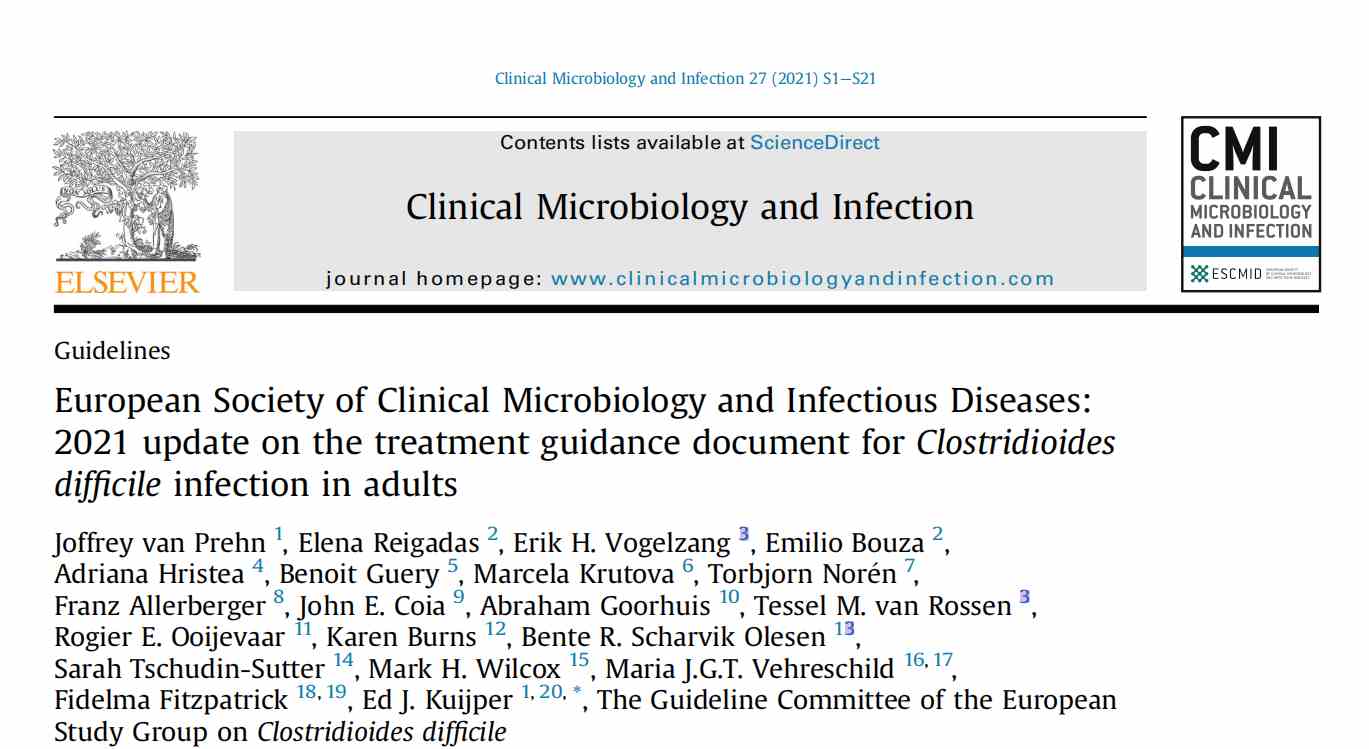
According to the 2021 update of the European Society of Clinical Microbiology and Infectious Diseases (ESCMID) guidance, laboratory testing should primarily be performed in patients presenting with clinically significant diarrhea suggestive of CDI.
The guideline defines diarrhea as three or more loose stools within 24 hours and emphasizes that laboratory findings should always be interpreted in conjunction with clinical presentation.
A positive laboratory result alone should not automatically be equated with CDI.
ESCMID: Combining Clinical Assessment and Laboratory Testing
To improve diagnostic accuracy while reducing overdiagnosis, ESCMID recommends a multistep diagnostic approach.
The initial screening stage may utilize:
- · Glutamate dehydrogenase (GDH), or
- · Nucleic Acid Amplification Testing (NAAT)
Both methods provide high sensitivity for identifying patients carrying C. difficile.
Compared with GDH, NAAT offers improved specificity by detecting toxin-associated genes carried by toxigenic strains rather than merely identifying the presence of the organism.
However, ESCMID also notes that reliance on NAAT alone may lead to overdiagnosis because toxin genes may be detected in asymptomatic carriers or patients without clinically relevant disease.
For this reason, positive screening results are ideally interpreted alongside toxin immunoassay results and clinical findings.
This strategy helps distinguish:
- · Active CDI
- · Asymptomatic colonization
- · Early-stage infection requiring further clinical evaluation
Supporting Guideline-Aligned CDI Testing
To support laboratories implementing molecular screening within CDI diagnostic pathways, Macro & Micro-Test offers the Nucleic Acid Detection Kit for Clostridium difficile Toxin A/B Gene (Fluorescence PCR).
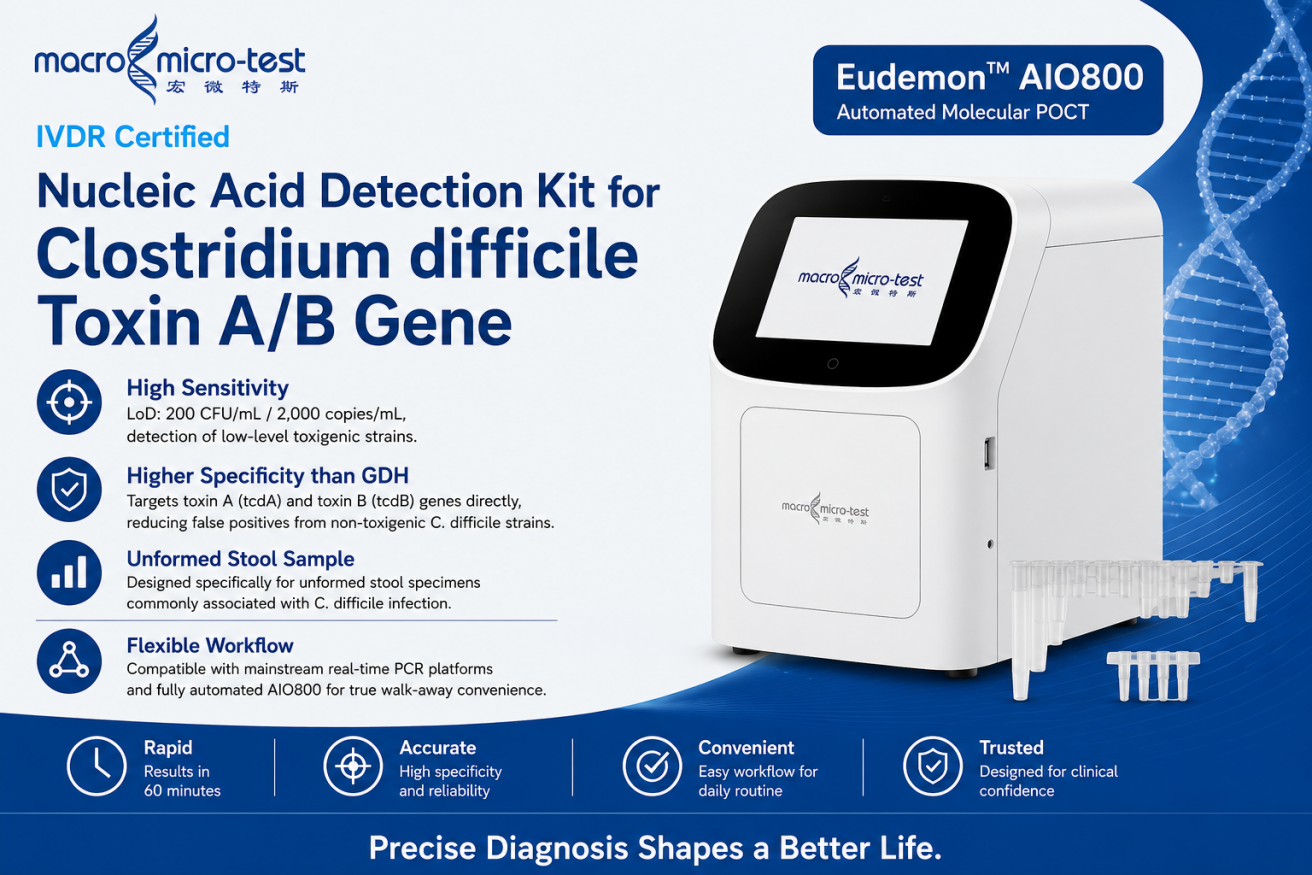
The assay directly detects the tcdA and tcdB genes from unformed stool specimens, enabling rapid identification of toxigenic C. difficile strains.
Key Advantages:
-High-Sensitivity with LoD as low as:200 CFU/mL/2,000 copies/mL, enabling reliable detection of low-level toxigenic strains.
-Targeting the toxin A (tcdA) and toxin B (tcdB) genes, the assay specifically identifies strains capable of producing the primary virulence factors associated with CDI.
- Flexible Workflow Integration:compatible with mainstream real-time PCR platforms and Fully Automated Testing on Eudemon AIO 800
-IVDR certified, demonstrating compliance with the stringent requirements of the European In Vitro Diagnostic Regulation and supporting laboratories across European and international markets.
Enabling Better Clinical Decisions
Accurate CDI diagnosis requires more than simply detecting C. difficile. It requires the integration of clinical symptoms, laboratory findings, and an understanding of the distinction between colonization and infection.
Aligned with ESCMID recommendations, high-sensitivity NAAT plays an important role in identifying toxigenic C. difficile strains as part of a comprehensive CDI diagnostic strategy.
Through its IVDR-certified molecular testing solutions, Macro & Micro-Test is committed to helping laboratories deliver rapid, reliable results that support informed clinical decisions, effective infection control measures, and improved patient outcomes
Post time: Jun-25-2026