
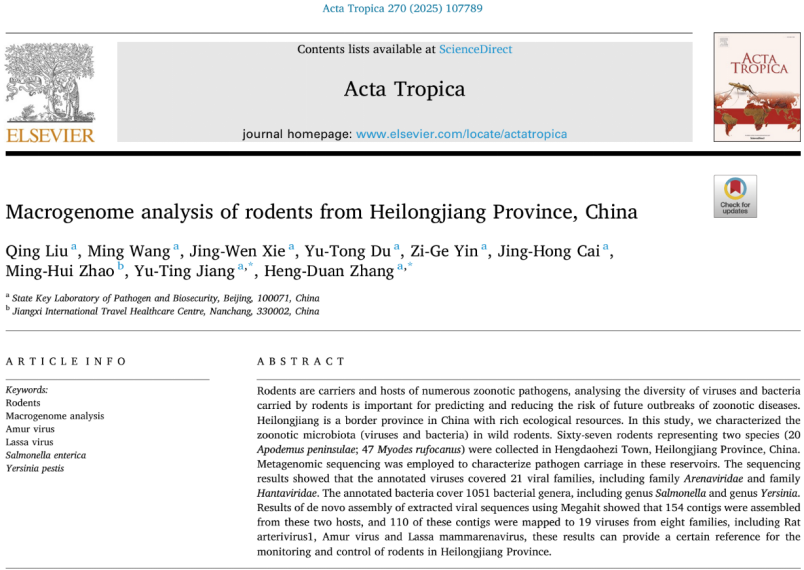
A recent metagenomic study has revealed a remarkably diverse spectrum of viruses and bacteria carried by rodents in Heilongjiang Province, including Lassa virus, Amur virus, Salmonella, and Yersinia pestis.
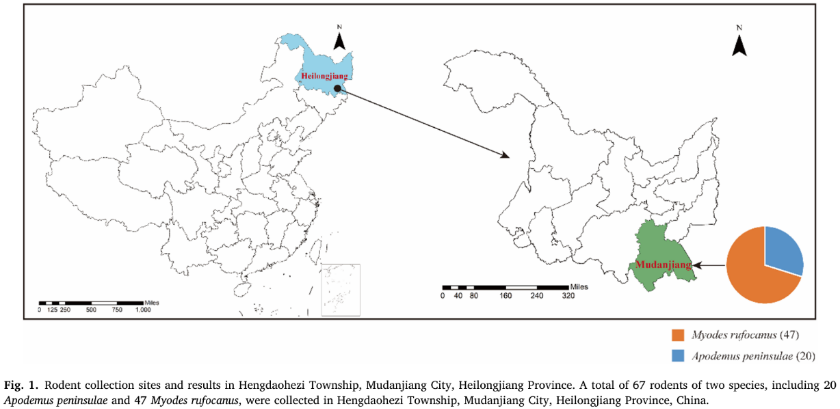
The research utilized the Pathogen RNA Enrichment Kit from Macro & Micro-Test, based on probe capture technology. By selectively depleting host rRNA and other conserved host fragments, the method effectively retained microbial RNA, significantly improving pathogen detection sensitivity. This pathogen RNA enrichment step was critical in achieving a high detection rate and provided strong technical support for pathogen surveillance.
Rodents: Key Reservoirs of Zoonotic Diseases
Rodents are the most species-rich and widely distributed group of mammals, comprising more than 2,000 species worldwide and accounting for over 40% of all mammalian species.
Beyond their ecological importance, rodents serve as major reservoirs and vectors of numerous zoonotic pathogens. Because rodent habitats frequently overlap with human environments—through direct bites, contact with excreta, or indirect transmission via fleas and mites—the pathogens they harbor pose persistent public health threats.
Notably, more than 70% of emerging infectious diseases originate from wildlife, with rodents representing one of the most significant viral reservoirs.
Heilongjiang Border Region: A Frontline for Pathogen Surveillance
Heilongjiang, a border province in northeastern China, possesses abundant ecological resources and shares borders with multiple countries. The combination of rich biodiversity and frequent cross-border population movement creates favorable conditions for pathogen transmission.
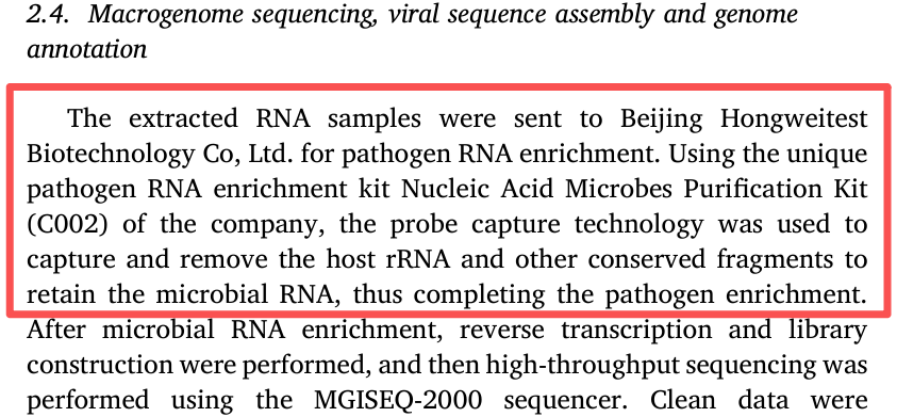
Between June and July 2021, researchers collected 67 wild rodents from Hengdaohezi Town, Mudanjiang City. The samples included:
l 20 Apodemus peninsulae
l 47 Myodes rufocanus
All specimens were captured in residential areas and surrounding farmlands, highlighting the close interface between human settlements and wildlife habitats.
Pathogen Enrichment Technology: Overcoming Host Background Interference
In metagenomic sequencing, host RNA typically dominates sequencing reads, masking low-abundance pathogen signals.
To address this challenge, the study employed Macro & Micro-Test’s Pathogen Metagenomic Detection Kit. Using probe capture technology, specifically designed probes bind to host rRNA and conserved sequences, enabling their depletion and thereby enriching microbial RNA.
This approach substantially improved pathogen detection sensitivity, allowing downstream sequencing to recover a higher proportion of pathogen reads. The enrichment step laid a solid foundation for accurately characterizing the pathogen spectrum carried by rodents.
Following enrichment, RNA samples underwent reverse transcription, library construction, and high-throughput sequencing. Bioinformatic analysis included:
l Host genome filtering
l Taxonomic classification using Kraken2
l Abundance correction with Bracken
This workflow generated a comprehensive profile of viral and bacterial communities.
Research Findings: Co-circulation of Multiple Viruses and Bacteria
Viral Findings
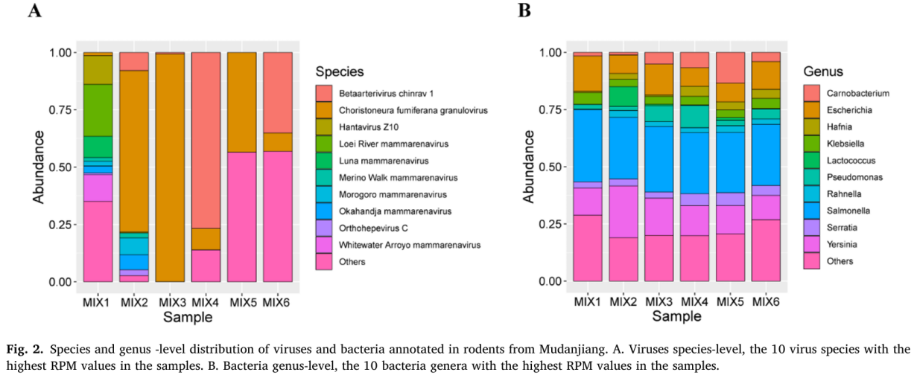
Viruses detected belonged to 21 viral families, including Arenaviridae and Hantaviridae.
Through de novo assembly using Megahit, 154 viral contigs were generated, of which 110 aligned with 19 viruses from eight families.
In Apodemus peninsulae, the following viruses were identified:
l Arenaviruses: Lassa virus, Wenzhou virus, Gairo virus
l Hantaviruses: Amur virus, Puumala virus
In Myodes rufocanus, Rat arterivirus and Amur virus were detected.
Among these pathogens:
l Lassa virus is a causative agent of viral hemorrhagic fever, with case fatality rates reaching approximately 20%.
l Amur virus is one of the pathogens responsible for hemorrhagic fever with renal syndrome (HFRS). China reports the highest global burden of hantavirus infections.
Bacterial Findings
A total of 1,051 bacterial genera were annotated.
The most abundant genera were:
l Salmonella (26–31%)
l Yersinia (11–23%)
Salmonella is a major foodborne pathogen, responsible for an estimated 9 million cases of typhoid fever and approximately 110,000 deaths annually worldwide.
Yersinia pestis, the causative agent of plague, has been responsible for three historic pandemics. Heilongjiang Province is recognized as one of China’s natural plague foci and remains a priority region for plague surveillance.
Significance of the Study
Scientific Contributions
This study represents the first report of Lassa virus fragments and rat arteritis virus in rodents from Heilongjiang, expanding China’s rodent-borne pathogen database.
It systematically characterizes viral and bacterial communities in local rodent populations, providing baseline data for zoonotic disease surveillance in border regions.
Public Health Implications
The findings highlight the need for continuous surveillance and pathogen screening of A. peninsulae and M. rufocanus.
The data provide scientific evidence supporting source control strategies for diseases such as plague and hemorrhagic fever with renal syndrome.
Methodological Strengths
Metagenomic sequencing enables unbiased detection of both known and novel pathogens.
In this study, Macro & Micro-Test’s pathogen enrichment technology demonstrated strong performance, effectively enhancing target pathogen detection in complex biological samples. The results confirm its capability to support high-sensitivity pathogen identification in wildlife surveillance.
Product Recommendation
Based on its successful application in this study, the Macro & Micro-Test Pathogen RNA Enrichment Kit is highly recommended for metagenomic surveillance research.
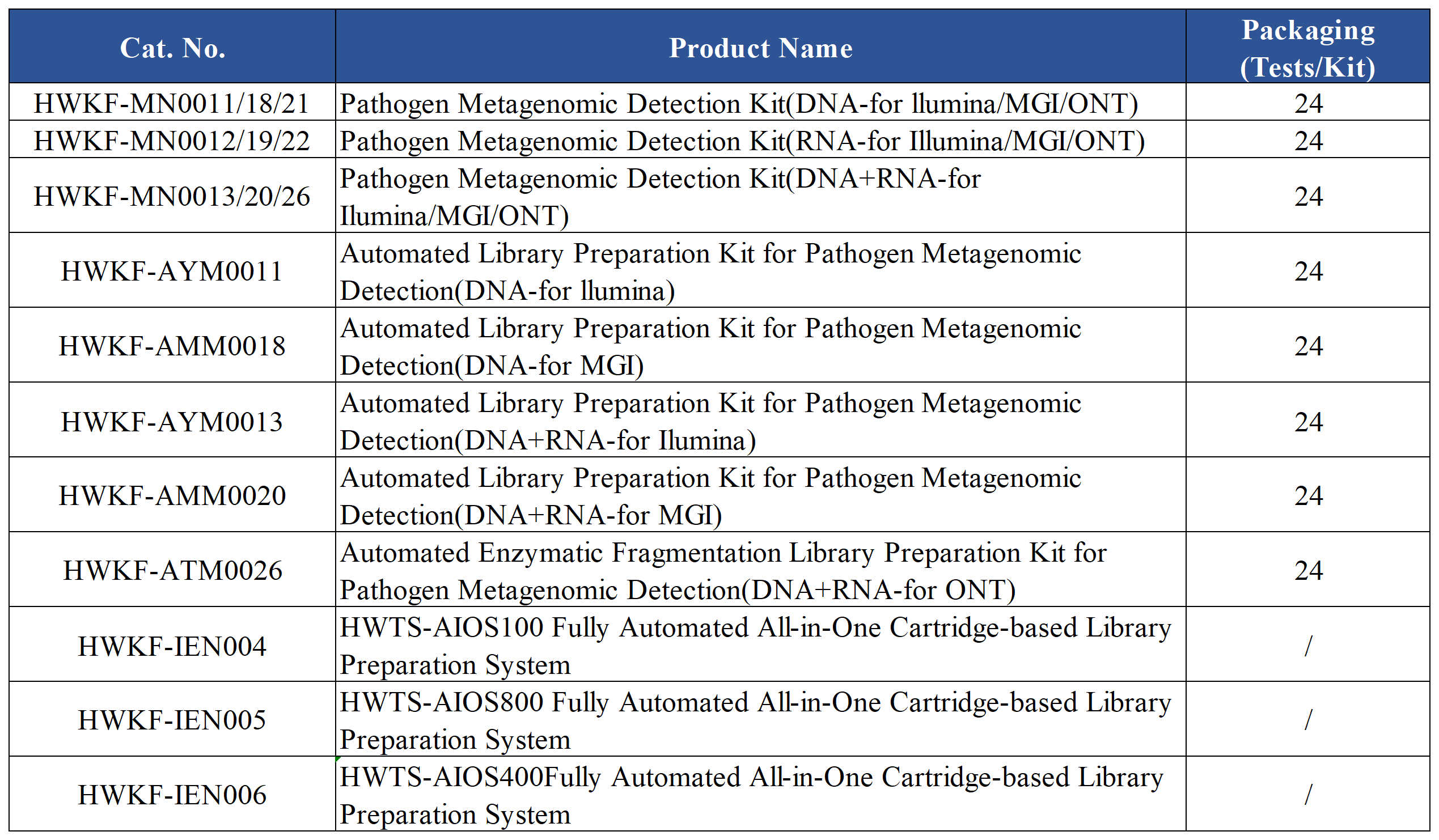
By efficiently depleting host nucleic acids and enriching microbial sequences, the kit significantly improves detection sensitivity and data quality. It represents an essential tool for accurate pathogen discovery in complex samples and provides robust technical support for public health surveillance, zoonotic risk assessment, and outbreak preparedness.
Contact to learn more: marketing@mmtest.com
Post time: Mar-02-2026