
As influenza, RSV, SARS-CoV-2, adenovirus, and other respiratory pathogens co-circulate, healthcare providers face a common challenge: How can pathogen evidence be obtained early enough to guide clinical decisions? For hospitalized and critically ill patients, broader pathogen and antimicrobial resistance (AMR) coverage is also needed to help reduce repeat testing and delays in targeted treatment.
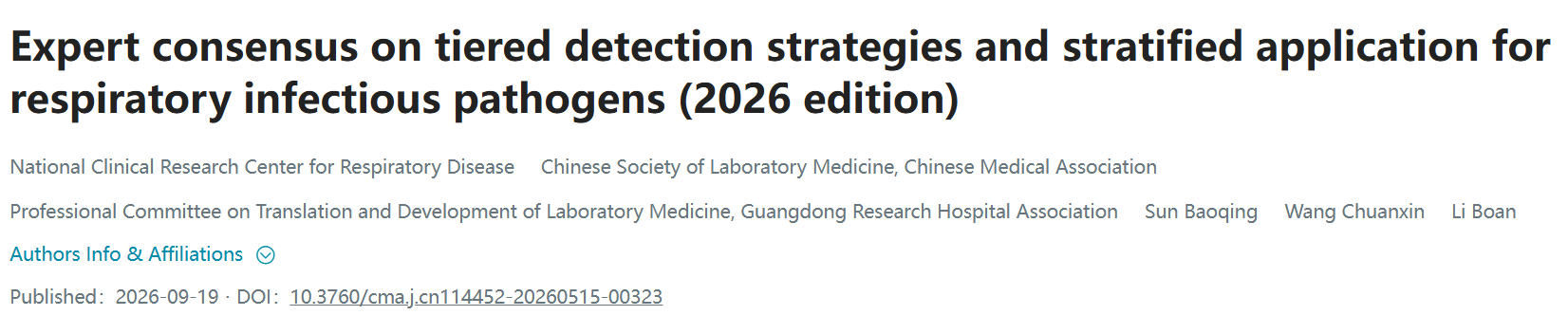
The Expert Consensus on Tiered Testing Strategies and Applications for Respiratory Pathogen Diagnosis (2026 Edition) offers a structured approach to this challenge. Led by the China National Clinical Research Center for Respiratory Diseases and the Laboratory Medicine Branch of the Chinese Medical Association, and developed with multidisciplinary experts, the consensus was published in the Chinese Journal of Laboratory Medicine, 2026, 49(9): 1069–1082.
Its recommendations emphasize selecting diagnostic methods according to clinical needs, testing availability, and turnaround time (TAT). The approach combines rapid screening, molecular point-of-care testing (POCT), nucleic acid testing, and multiplex PCR to support different clinical settings.
Macro & Micro-Test’s respiratory portfolio follows this tiered approach, offering options from rapid antigen screening to automated molecular testing and AMR detection.
The Tiered Approach: Bringing Pathogen Evidence into Clinical Decision-Making Earlier
Rapid screening first. Recommendation 2 emphasizes selecting respiratory pathogen tests according to the clinical setting, diagnostic purpose, and availability of testing. Where feasible, nucleic acid testing is preferred. During respiratory virus seasons, antigen tests can provide rapid screening where molecular testing is unavailable or difficult to access. Positive results can support clinical assessment, but a negative result does not rule out infection. When clinical suspicion remains high despite a negative antigen result, nucleic acid testing should be used for further assessment; if immediate testing is not feasible, follow-up testing should be completed within 24–48 hours, in line with the consensus recommendation.
Moving molecular POCT closer to the point of care. Recommendations 5 and 9 highlight the need for rapid turnaround times (TATs) in fever clinics, emergency departments, and ICUs. Molecular POCT and integrated rapid molecular systems can help provide timely pathogen evidence to support patient triage, isolation, and targeted treatment decisions. Primary care facilities with appropriate capabilities may also implement molecular POCT, provided testing is incorporated into a unified laboratory quality management framework.
Nucleic acid testing as the backbone, with multiplex PCR extending pathogen and resistance coverage. For hospitalized and critically ill patients, nucleic acid testing plays a central role in the diagnostic pathway. Test selection and result interpretation should take into account specimen quality, clinical presentation, and the patient’s risk profile.
For severe community-acquired pneumonia (SCAP), hospital-acquired pneumonia (HAP), ventilator-associated pneumonia (VAP), and cases where empirical treatment is not producing the expected response, appropriate lower respiratory tract specimens should be collected before empirical antimicrobial therapy whenever feasible. Bronchoalveolar lavage fluid is preferred in relevant clinical settings, and blood cultures should be collected in parallel. Where appropriate, multiplex PCR or syndromic testing can help identify multiple pathogens and relevant resistance genes within a single testing workflow, potentially reducing repeat testing. Molecular POCT or antigen testing targeting core circulating pathogens may also support timely decisions, depending on the clinical scenario (Recommendations 1, 6, and 11, as cited in the consensus).
AMR detection is an important component of this tiered pathway for hospitalized and critically ill patients. Before phenotypic antimicrobial susceptibility testing results become available, strong positive findings for key resistance genes may support early empirical treatment adjustment or escalation. However, a negative resistance gene result alone should not be used to justify treatment de-escalation. Results must be interpreted alongside phenotypic susceptibility testing and the overall clinical picture.
Together, these recommendations highlight a practical principle: the goal is not simply to test more, but to select the right test, at the right time, for the right clinical decision.
Macro & Micro-Test’s Two Complementary Solutions Aligned with the Tiered Testing Approach
Solution 1 — Rapid Initial Screening: IVDR-Marked Respiratory Antigen Tests
Macro & Micro-Test offers three respiratory antigen combinations:
5-in-1: COVID-19 + Influenza A/B + RSV + Adenovirus
3-in-1: COVID-19 + Influenza A/B
2-in-1: RSV + Adenovirus
These options provide different levels of pathogen coverage, suitable for self-testing and near-patient testing with results in about 15 minutes.
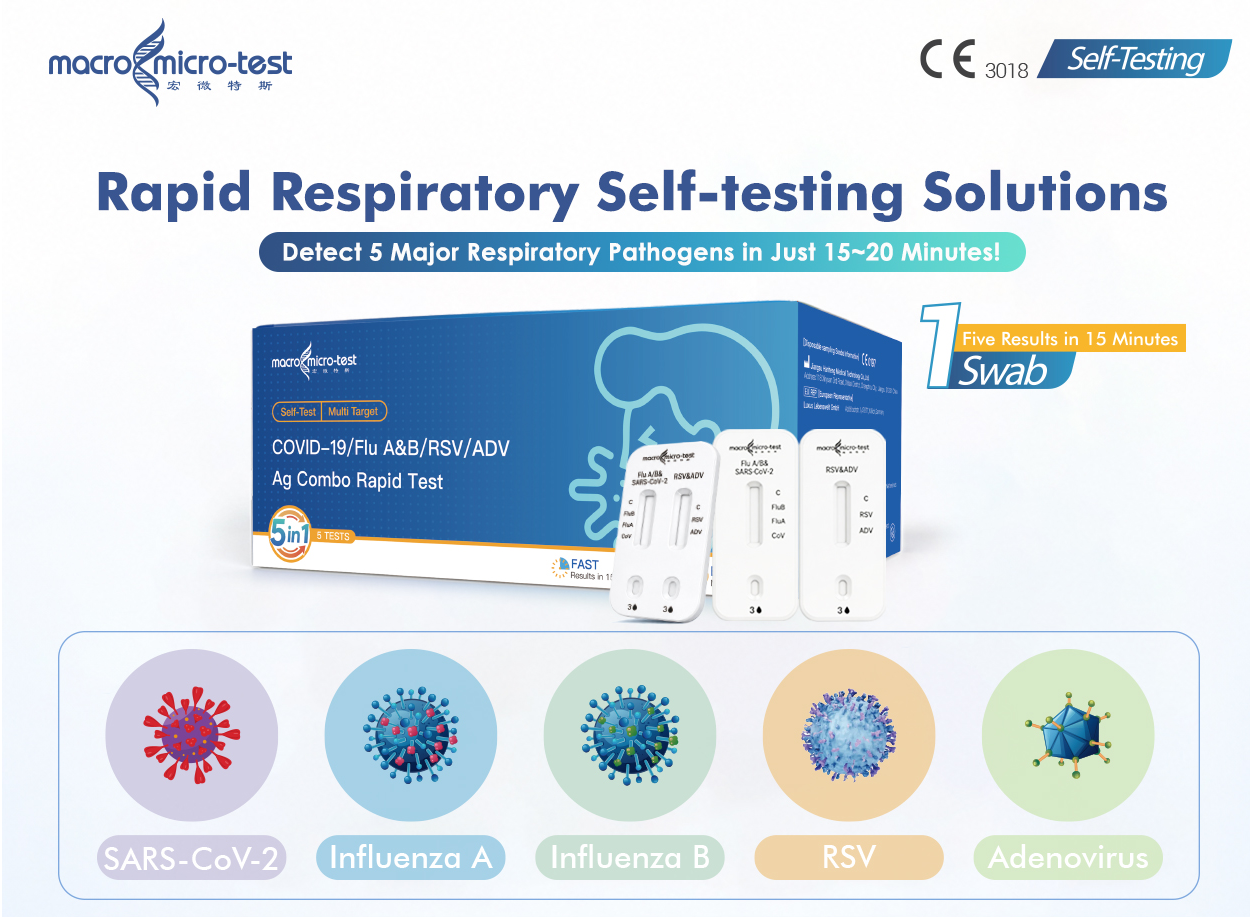
Aligned with the rapid screening pathway, these tests can support timely assessment and triage. When results are negative but clinical suspicion remains high, further molecular testing should be considered.
Solution 2 — Automated Molecular Testing: From Molecular POCT to Multiplex PCR and AMR Detection
This solution addresses two key needs: rapid molecular results at the point of care and broader pathogen coverage for hospitalized and critically ill patients.
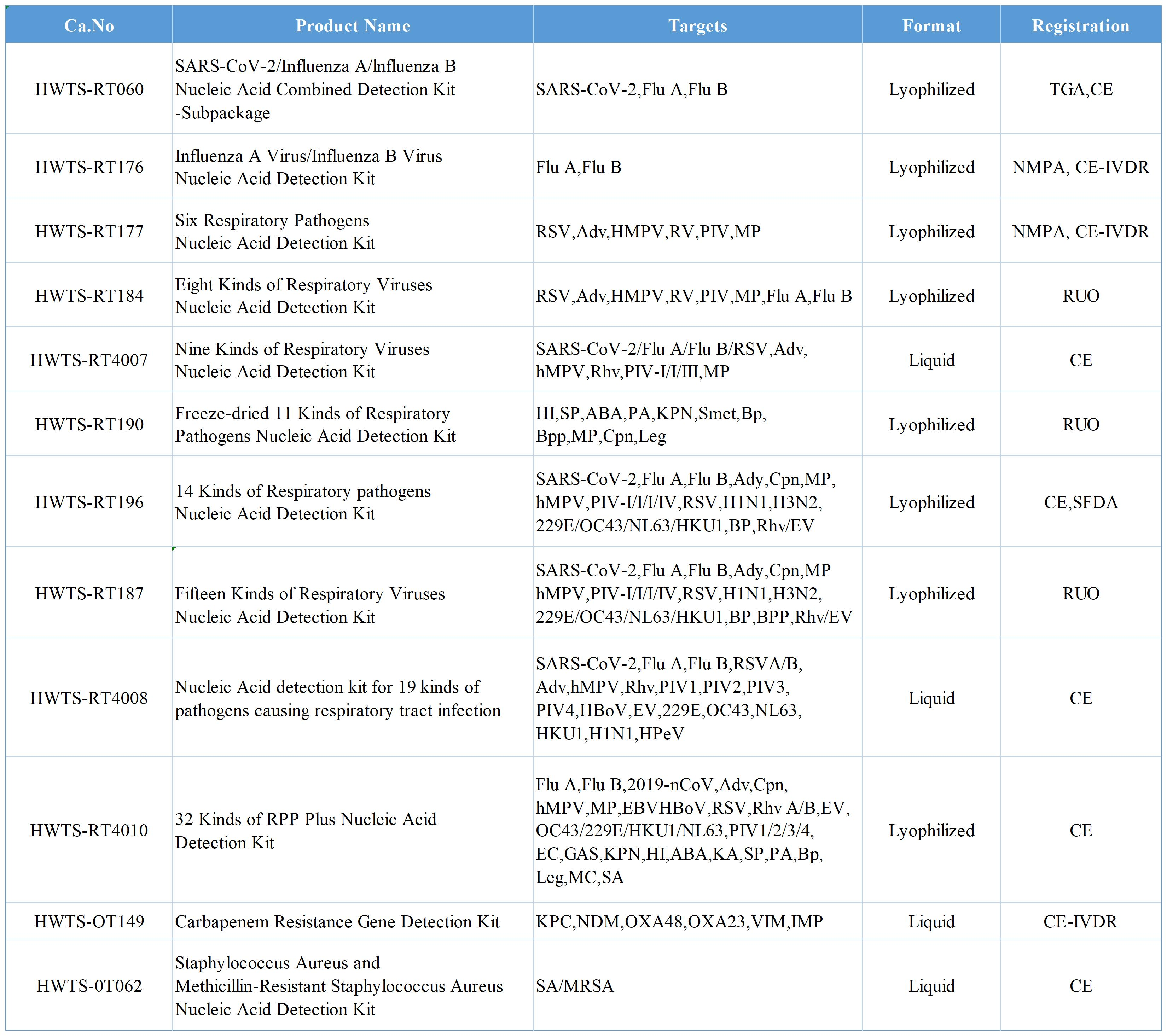
The Eudemon™ AIO800 integrates nucleic acid extraction, amplification, detection, and reporting in a compact automated system. Its compatible reagent portfolio ranges from core respiratory pathogens to panels covering up to 32 targets, depending on the assay. Complementary tests for SA & MRSA and carbapenem resistance genes further extend its application to AMR testing.

Outpatient, emergency, and critical care: Timely molecular results to support isolation and treatment decisions.
Primary care: Standardized molecular testing to support triage where capabilities are available.
Inpatient care: Multiplex PCR and resistance gene detection for broader pathogen coverage and fewer repeat tests.
Flexible testing: Options ranging from core respiratory pathogens to broader respiratory panels and selected AMR markers.
From Testing Tiers to Practical Clinical Pathways
Respiratory infection season highlights the need to match testing methods to clinical settings and decisions.
From rapid antigen screening to molecular POCT, and from multiplex respiratory PCR to AMR detection, Macro & Micro-Test offers complementary options across the respiratory diagnostic pathway.
Precise Diagnosis Shapes A Better Life.
Post time: Oct-23-2026