
The journey of safeguarding a newborn’s health begins long before delivery—rooted in awareness, proactive preparation, and access to evidence-based care. Prenatal infections, which occur when pathogens affect the pregnant person, fetus, or newborn, remain a significant concern. Among these, Group B Streptococcus (GBS) is a common yet potentially serious threat. Fortunately, through informed prevention strategies and modern testing, parents and healthcare providers can effectively protect both mother and baby.

February: A Spotlight on Prenatal Infection Prevention
February marks Prenatal Infection Prevention Month, a timely reminder of the risks posed by infections during pregnancy and the critical role of early detection. While several pathogens can pose risks during pregnancy—including cytomegalovirus (CMV), Listeria, and Zika virus—Group B Streptococcus (GBS) demands particular attention. It is not only highly prevalent but also uniquely preventable through routine screening and timely intervention. This makes raising awareness and adopting proactive measures especially critical in the fight against GBS, directly contributing to healthier outcomes for both mothers and newborns.
Why GBS Screening Matters
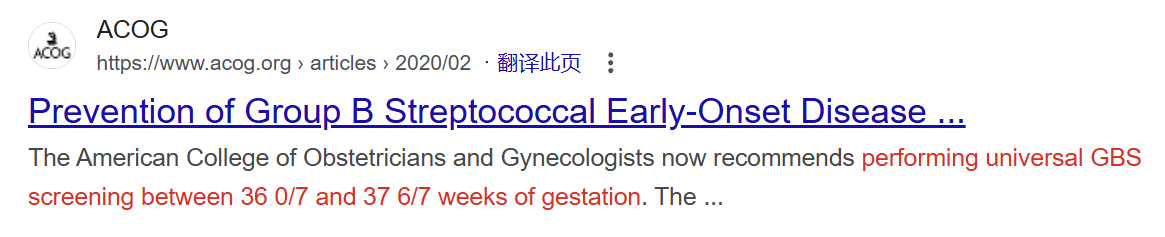
GBS is a leading cause of neonatal infections, such as meningitis, sepsis, and pneumonia. Since colonization is often asymptomatic, testing is the only reliable way to identify carriers. According to the American College of Obstetricians and Gynecologists (ACOG), universal screening at 36–37 weeks of gestation, followed by intrapartum antibiotic prophylaxis for carriers, significantly reduces the risk of transmission to the newborn.
The Limitations of Traditional GBS Testing
Conventional detection methods present several challenges:
►Culture-based methods require 18–36 hours and may yield false negatives (up to 18.5%), especially if antibiotics have been used.
►Immunoassays provide rapid results but suffer from low sensitivity.
►Molecular tests offer higher accuracy but typically take about two hours—a delay that can be critical in urgent clinical situations, such as preterm labor or rupture of membranes.
A Breakthrough Solution: Macro & Micro-Test GBS + Easy Amp
Addressing these gaps, the Macro & Micro-Test Easy Amp System delivers a rapid, accurate, and flexible solution for antenatal and intrapartum GBS detection.
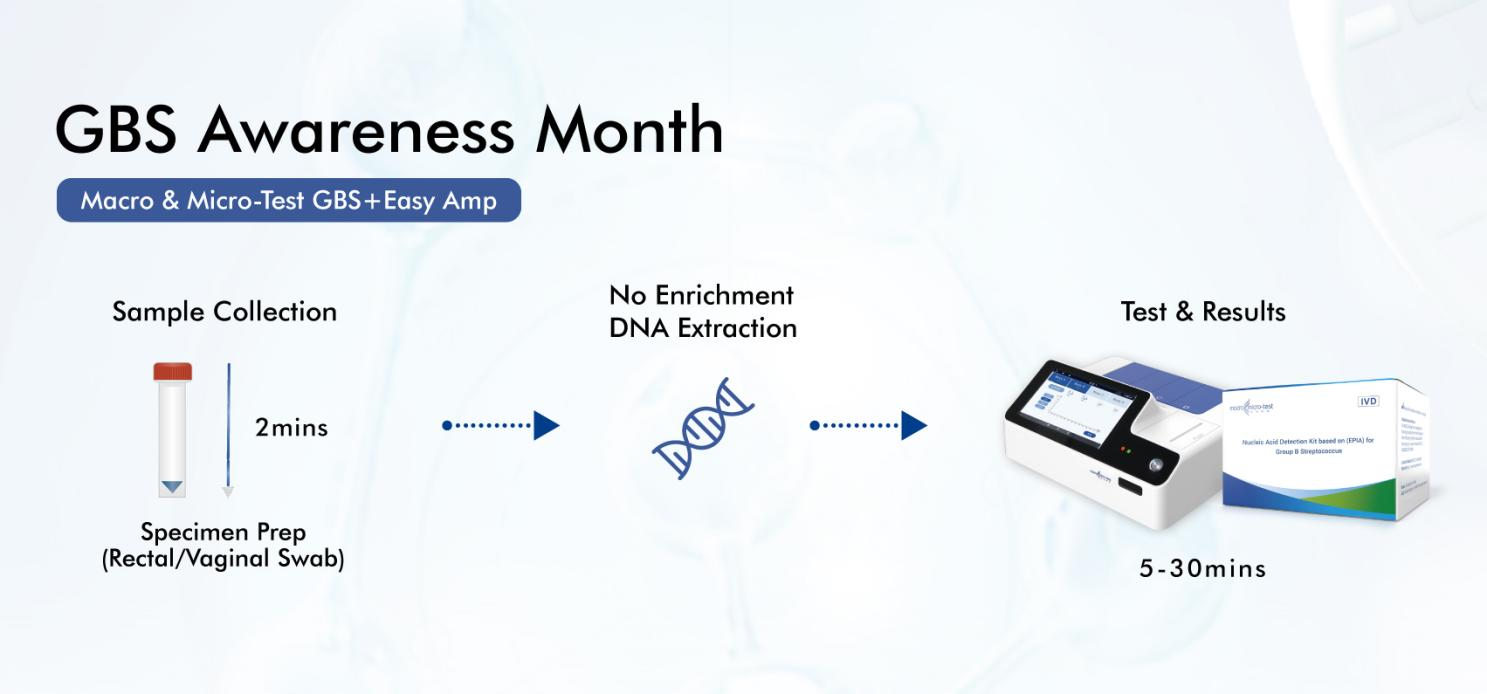
Its advantages include:
Results in just 5 minutes for positive cases, enabling timely clinical decision-making.
On-demand molecular testing with an independent modular design, adaptable to various clinical settings.
High accuracy for vaginal/rectal swabs, minimizing false-negative results.
Operational Flexibility: Independent system modules allow testing to adapt to clinical workflow needs.
Toward Healthier Pregnancies: Awareness & Innovation in Action
Prenatal Infection Prevention Month underscores the importance of integrating education, screening, and technological advances into routine care.
Empowering Healthcare Providers with tools like the Macro & Micro-Test GBS + Easy Amp System enhances prenatal protection and supports safer deliveries. By uniting the collective strength of community awareness, distributor networks, clinical expertise, and frontline care, we achieve transformative outcomes:
1.Safeguard universal access to timely and accurate GBS screening.
2. Enable immediate intervention with rapid diagnostics at critical moments.
3. Significantly reduce the incidence of early-onset GBS disease, meningitis, and sepsis.
4. Ensure every newborn the healthiest and safest possible start in life.
Contact us at marketing@mmtest.com for detailed product information and distribution policies.
Post time: Feb-04-2026