
Emerging infectious diseases continue to challenge global public health systems. The ongoing Bundibugyo virus disease (BVD) outbreak in the Democratic Republic of the Congo (DRC) is a reminder of the importance of early case identification, reliable laboratory testing, and effective infection prevention and control.
According to the World Health Organization (WHO) Disease Outbreak News published on November 20, 2026, the outbreak had reached 11,613 confirmed cases and 5,678 deaths in the DRC as of November 17, representing a crude case fatality ratio of 48.9%. Cases had been reported across 68 health zones in eight provinces, with active transmission continuing in 48 health zones.
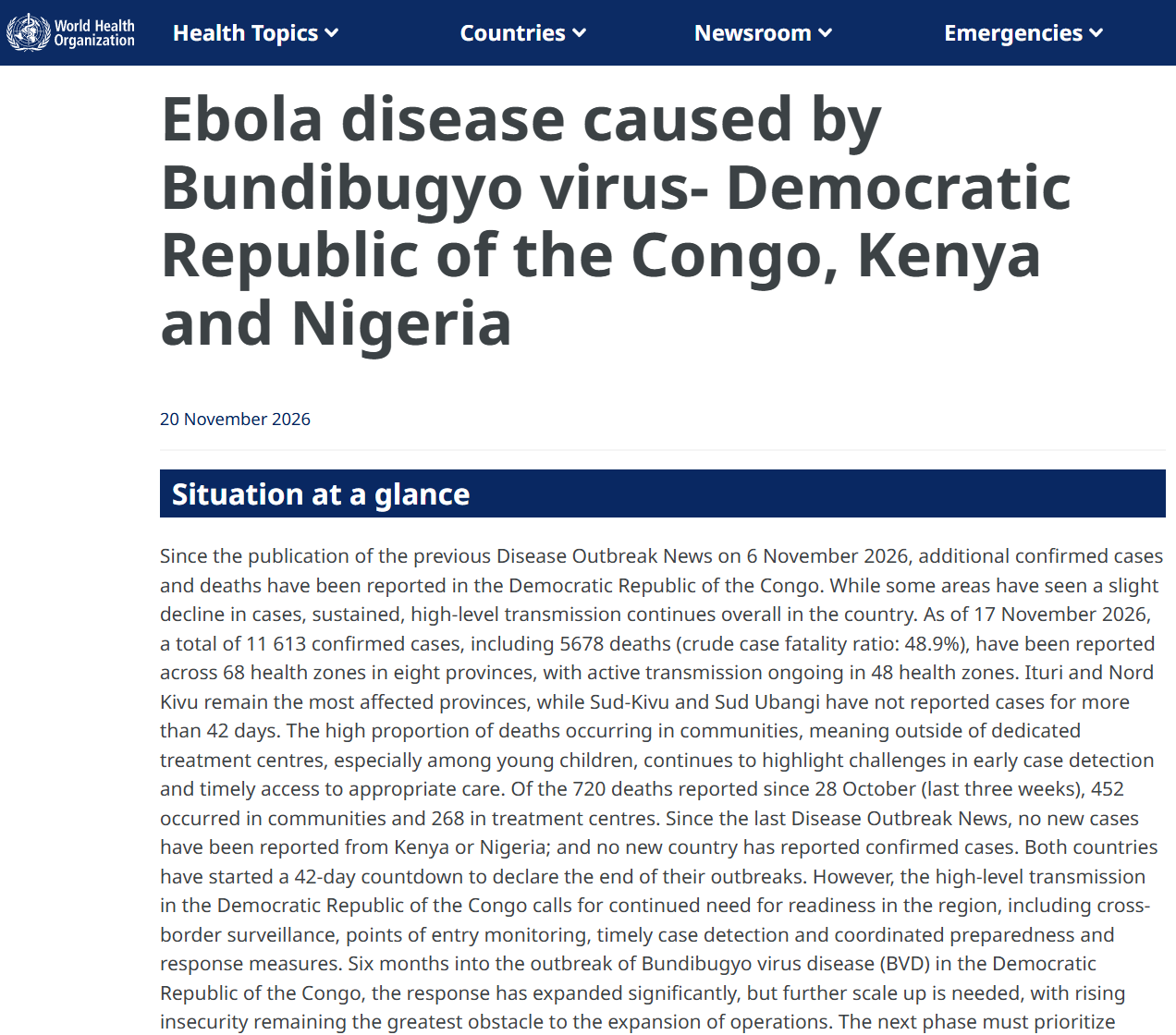
WHO also confirmed that the event remained a Public Health Emergency of International Concern (PHEIC), highlighting the continued need for coordinated surveillance, timely detection, and preparedness.
These developments underscore an important question: How can reliable molecular diagnostics support preparedness and response to emerging viral threats?
Understanding the Public Health Significance of Bundibugyo Virus
Bundibugyo virus (BDBV) is one of the viruses responsible for Ebola disease. It was first identified during an outbreak in Uganda in 2007–2008 and belongs to the genus Orthoebolavirus.
Like other Ebola viruses, BDBV can spread through direct contact with the blood, secretions, organs, or other bodily fluids of infected people, as well as contaminated materials. Healthcare workers and others involved in patient care may face exposure risks if appropriate infection prevention and control measures are not followed.
The current outbreak highlights several persistent public health challenges:
- Early case identification: Delays in recognizing suspected cases can complicate timely isolation and clinical management.
- Geographical surveillance: Continued transmission across multiple health zones requires coordinated monitoring and response.
- Laboratory preparedness: Diagnostic capacity must be available to support the identification of suspected infections.
- Infection prevention and control: Appropriate procedures are essential to protect healthcare workers, laboratory personnel, and communities.
In this context, reliable laboratory diagnostics are an essential component of outbreak preparedness.
Why Does Molecular Testing Matter?
Clinical symptoms alone may not be sufficient to distinguish BDBV infection from other infectious diseases with overlapping presentations. Laboratory confirmation therefore plays a critical role in identifying suspected cases and guiding appropriate public health responses.
The European Centre for Disease Prevention and Control (ECDC) recommends nucleic acid amplification testing (NAAT) for laboratory confirmation of Orthoebolavirus infections, including BDBV.
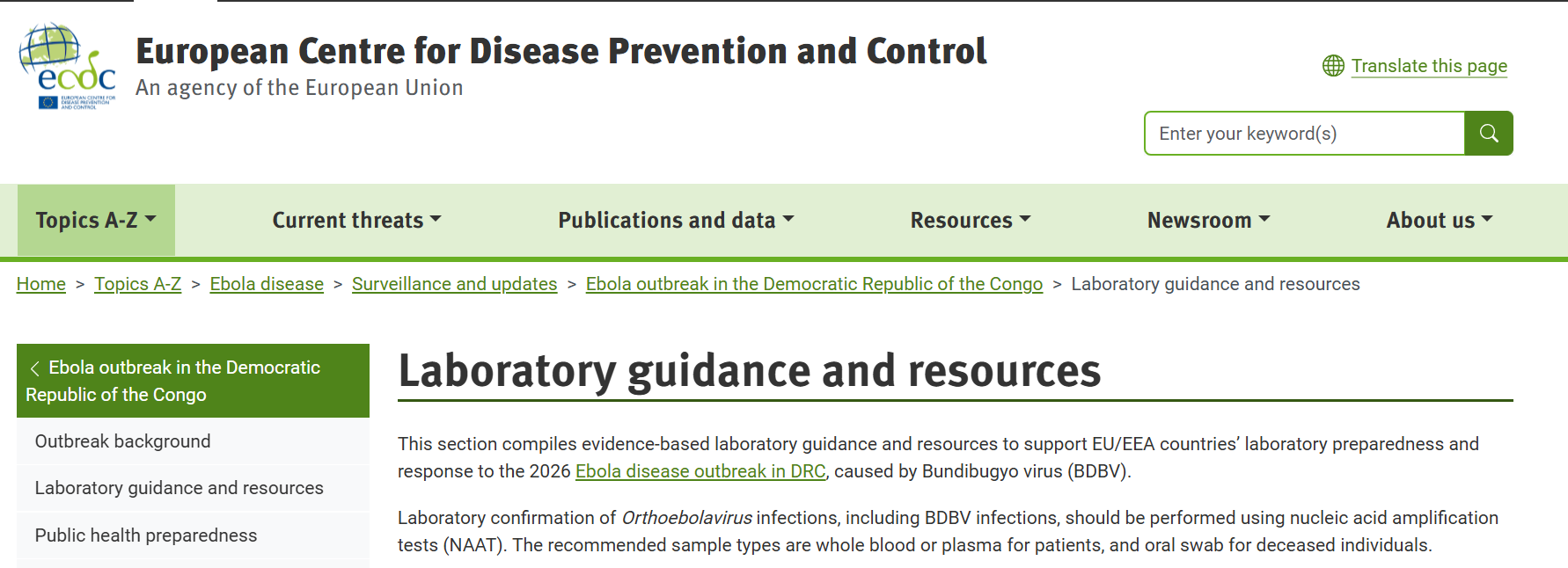
Molecular testing offers several important advantages:
- Target-specific detection: BDBV-specific molecular assays help identify the virus responsible for suspected infections.
- Timely laboratory confirmation: Real-time PCR supports the detection of viral genetic material, providing important diagnostic information for case assessment.
- Preparedness for emerging threats: Access to appropriate molecular assays strengthens laboratory readiness to respond to outbreaks.
- Support for surveillance and response: Reliable diagnostic results contribute to case identification, monitoring, and coordinated public health action.
Importantly, laboratories should verify that their molecular assays can specifically detect BDBV rather than assuming that assays designed for other Ebola viruses will detect all Orthoebolavirus species.
Biosafety Matters at Every Stage of Testing
Reliable diagnostics are only one part of a safe and effective laboratory response. Specimen collection, transportation, handling, and testing must all follow appropriate biosafety procedures.
ECDC emphasizes a risk-based approach to laboratory handling of specimens from persons under investigation, probable cases, and confirmed cases.
Key considerations include:
- Appropriate personal protective equipment and trained personnel for specimen collection.
- Risk assessment and suitable containment measures during specimen handling.
- Validated sample inactivation procedures where applicable.
- Appropriate laboratory workflows to minimize potential exposure.
- Strict adherence to local biosafety requirements and established operating procedures.
For laboratories handling high-consequence pathogens, contamination prevention and workflow management are particularly important.
Macro & Micro-Test: Bundibugyo Ebola Virus Detection Solution
To support molecular testing needs, Macro & Micro-Test offers the Bundibugyo Ebola Virus Detection Kit, designed to detect Bundibugyo ebolavirus (BDBV) by targeting the NP gene.
Key Assay Features:
- Target: Bundibugyo ebolavirus (BDBV) – NP gene
- Technology: TaqMan real-time PCR
- Specimen types: Whole blood, serum/plasma, and oral swab
- Platform compatibility: Compatible with widely used real-time PCR platforms
- Integrated platform: Also supports the AIO800 Sample-to-Answer Molecular POCT System
The kit is available in both liquid and lyophilized formats. The lyophilized version can be stored at 2–28°C, offering greater flexibility in storage and transportation logistics.
By providing different reagent formats and platform options, the solution is designed to accommodate diverse molecular testing workflows.
AIO800: Streamlined Sample-to-Answer Molecular Testing
For laboratories seeking an integrated molecular testing workflow, the AIO800 combines nucleic acid extraction, amplification, detection, and result reporting in one automated system.
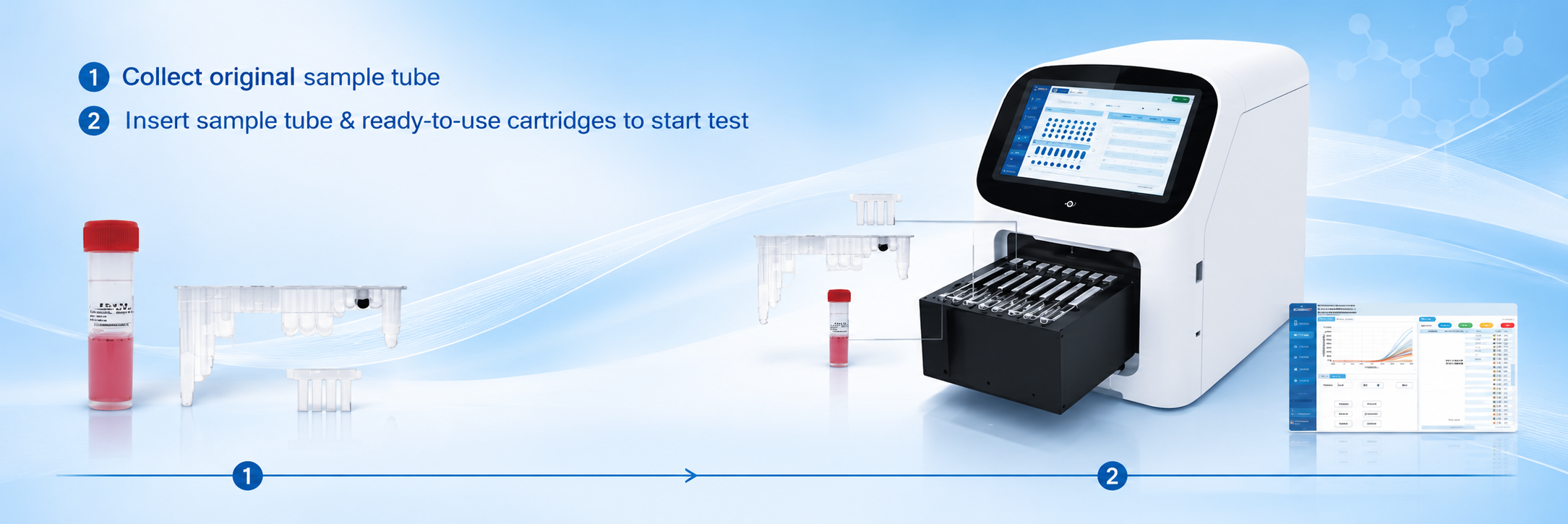
Featuring an original sample-tube loading design, the system streamlines the testing process through a Sample-to-Answer workflow, helping simplify molecular testing operations.
With its integrated cartridge-based workflow and automated operation, AIO800 provides an additional platform option for compatible molecular assays, including Macro & Micro-Test’s BDBV detection solution.
By integrating multiple testing steps into one system, AIO800 offers a streamlined approach to molecular testing, supporting diverse diagnostic needs in appropriate laboratory and testing settings.
Building Diagnostic Readiness for Emerging Viral Threats
The ongoing BDBV outbreak demonstrates that preparedness requires more than responding after cases emerge. It depends on coordinated surveillance, reliable laboratory diagnostics, appropriate biosafety practices, and access to suitable testing solutions.
At Macro & Micro-Test, we remain committed to developing molecular diagnostic technologies that support infectious disease detection and laboratory preparedness.
Reliable diagnostics. Integrated workflows. Greater readiness for emerging infectious disease challenges.
References:
- WHO. Ebola disease caused by Bundibugyo virus – Democratic Republic of the Congo, Kenya and Nigeria. Disease Outbreak News, November 20, 2026.
https://www.who.int/emergencies/disease-outbreak-news/item/2026-DON630 - ECDC. Laboratory guidance and resources – 2026 Ebola disease outbreak caused by Bundibugyo virus.
https://www.ecdc.europa.eu/en/ebola-disease/surveillance-and-updates/ebola-outbreak/laboratory-guidance - ECDC. Threat Assessment Brief: Ebola disease outbreak caused by Bundibugyo virus – Democratic Republic of the Congo and Uganda, 2026. May 21, 2026.
Post time: Nov-26-2026