
At the beginning of 2026, measles has once again become a major global public health concern. Despite being vaccine-preventable, this highly contagious disease is resurging in multiple regions due to declining vaccination coverage, widening immunity gaps, and fully restored international travel.
The current situation is a reminder: once herd immunity weakens, measles spreads quickly. In such a landscape, vaccination remains the foundation — but rapid, high-sensitivity detection is equally critical to interrupt transmission chains.
2026 Hotspot Review: What the Numbers Tell Us
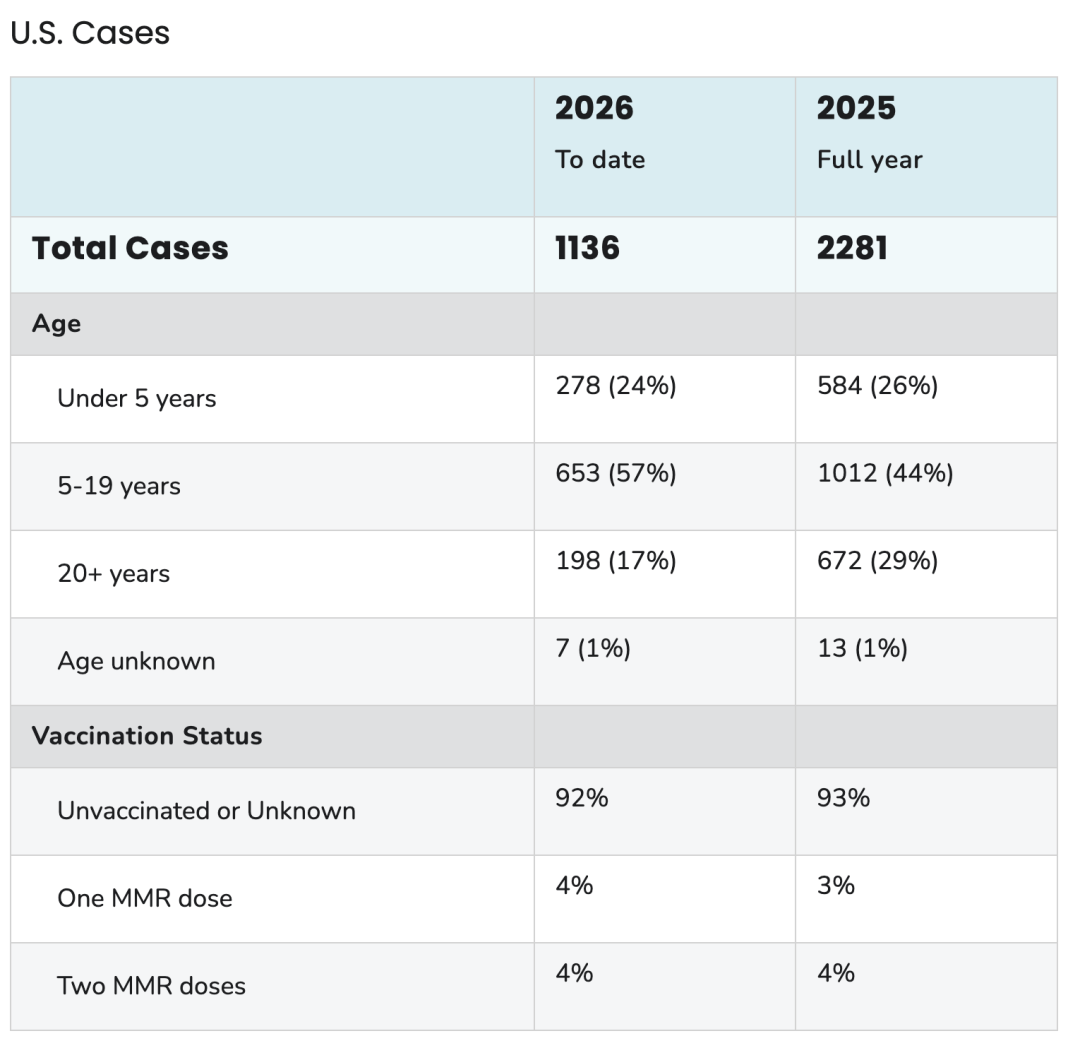
As of early 2026, the United States has reported more than 1,100 confirmed measles cases, already exceeding the pace seen at the same time last year. Nearly 90% of cases are linked to ongoing outbreaks, and infections have been identified across more than two dozen states. The majority of cases involve individuals who were unvaccinated or whose vaccination status is unknown.
In Europe and Central Asia, although total measles cases declined significantly in 2025 compared with 2024, nearly 34,000 cases were still reported. Health authorities warn that the underlying transmission risk remains high, particularly in communities where vaccination coverage has fallen below the critical threshold.
Several countries have lost their measles elimination status due to the sustained local transmission — a clear sign that immunity gaps are widening.
The Core Issue: Herd Immunity Requires 95%
Measles is so contagious that approximately 95% vaccination coverage is required to achieve herd immunity. However, vaccination rates in several countries have dropped in recent years, leaving millions of children vulnerable. Globally, an estimated 30 million infants missed routine measles vaccination in recent years due to disrupted immunization services, vaccine hesitancy, and healthcare inequities.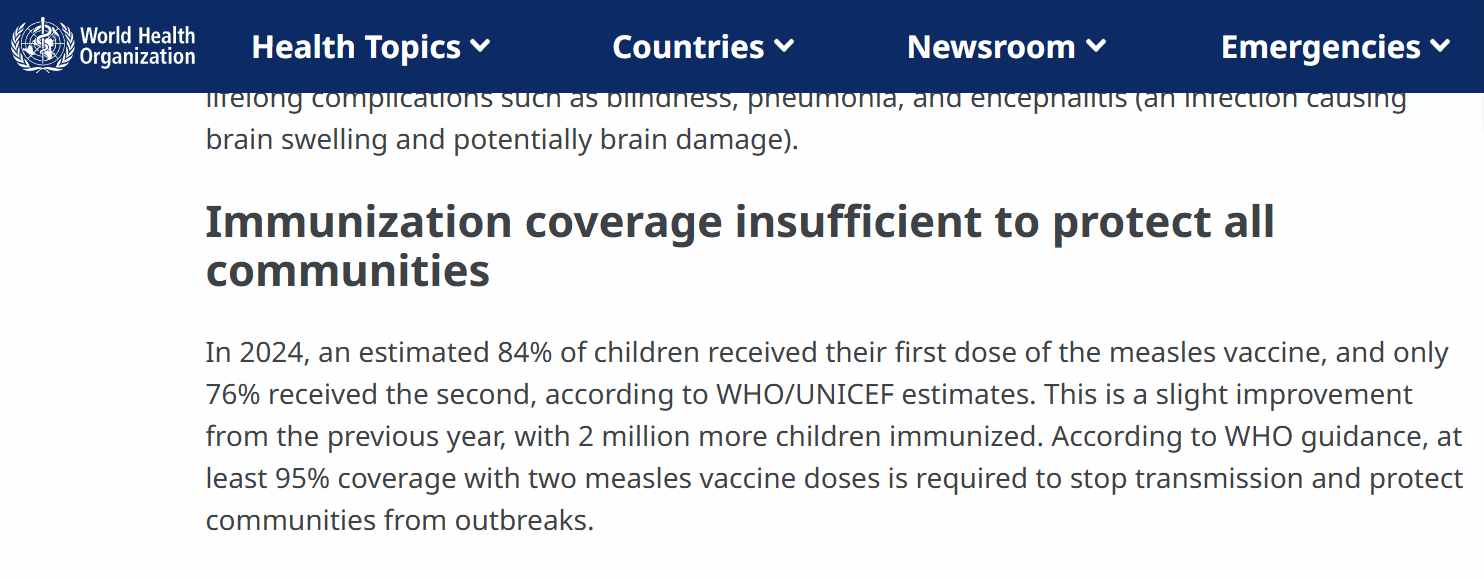
When immunity gaps expand, outbreaks become inevitable.
Understanding Measles: More Than Just a Rash
Transmission: One of the Most Contagious Viruses on Earth
According to the World Health Organization, measles is one of the world’s most contagious diseases.
-One infected individual can transmit the virus to 12–18 others.
-Among non-immune individuals exposed to the virus, up to 90% will become infected.
-The virus can remain active and contagious in the air or on surfaces for up to two hours.
-It can spread from four days before rash onset to four days after.
This means someone can enter a room long after an infected person has left — and still inhale infectious virus particles.
Who Is at Risk?
Any non-immune person can become infected. However, the highest risk groups include:
-Unvaccinated young children
-Pregnant individuals
-Malnourished children
-People with weakened immune systems
Measles remains common in parts of Africa, the Middle East, and Asia, particularly in countries with low income levels or fragile health infrastructures. In regions affected by conflict or natural disasters, routine immunization services are often interrupted, and overcrowded living conditions further increase transmission risk.
Complications: The “Immune Memory Eraser”
Measles is not a mild childhood illness. It can lead to:
-Pneumonia
-Encephalitis (brain swelling that may cause permanent damage)
-Severe diarrhea and dehydration
-Blindness
Importantly, measles can suppress the immune system — sometimes described as an “immune memory eraser.” After infection, children may become more vulnerable to other infectious diseases for months or even years.
Breakthrough Infections: Vaccines Are Highly Effective — But Not 100%
Two doses of the MMR vaccine provide approximately 97% protection against measles. However, no vaccine offers absolute protection. Breakthrough infections can occur in vaccinated individuals, though these cases are typically milder and less likely to result in severe complications.
Why 2026 Transmission Risk Remains High
The global measles landscape in 2026 is particularly challenging due to:
-High baseline case numbers carried over from previous years
-Loss of elimination status in multiple countries
-Fully restored international travel, increasing the risk of importation
-Persistent vaccine hesitancy and misinformation
Imported cases remain a major threat even in countries close to elimination. A single infected traveler can ignite a multi-state outbreak if immunity levels are insufficient.
The Critical Role of High-Sensitivity PCR Testing
In settings where outbreaks and elimination phases coexist, early and accurate laboratory diagnosis becomes essential.
Traditional IgM serology testing may produce false-negative results in the early stage of infection, especially before rash onset. In contrast, RT-PCR nucleic acid testing can detect measles viral RNA during the prodromal phase (fever, cough, coryza), days before serological confirmation is possible.
Why High Sensitivity Matters
-Earlier Diagnosis
Detect infection before rash appears, enabling faster isolation and contact tracing.
-Confirmation of Breakthrough Cases
Vaccinated individuals may present atypical symptoms; nucleic acid testing provides definitive confirmation.
-Outbreak Investigation
In the fight against measles, high-sensitivity PCR acts as the “eyes” of the public health system — allowing earlier detection and quicker interruption of spread.
Product Spotlight: Macro & Micro-Test Measles Virus Detection Solution
In response to the evolving measles situation in 2026, Macro & Micro-Test provides an efficient and accurate molecular detection solution:
HWTS-RT028A Measles Virus Nucleic Acid Detection Kit (Fluorescence PCR)
-High Sensitivity
Limit of Detection (LoD) as low as 500 copies/mL, enabling early-stage detection.
-Versatile Sample Compatibility
Suitable for oropharyngeal swabs and herpes fluid specimens.
-Laboratory-Friendly Compatibility
Adaptable to the mainstream existing PCR system in the labs, assisting labs in upgrade testing capacity during outbreaks
The measles resurgence in 2026 sends a clear message: when herd immunity gaps emerge, highly contagious pathogens regain momentum quickly. Vaccination remains the cornerstone of prevention, but high-sensitivity molecular detection is a critical component of outbreak preparedness and response.
Macro & Micro-Test remains committed to advancing pathogen detection technologies and strengthening global public health defense through innovation.
Contact us at marketing@mmtest.com
Post time: Mar-05-2026