
2026 marks the 25th anniversary of the discovery of human metapneumovirus (HMPV).
In 2001, a research team led by Dutch virologist Albert Osterhaus first isolated HMPV from nasopharyngeal aspirates collected from infants with respiratory infections. Yet HMPV was not truly a “new” virus. Subsequent serological studies revealed antibodies against HMPV in human sera dating back to the 1950s.
Why did it remain unidentified for so long?
Part of the answer lies in its clinical similarity to respiratory syncytial virus (RSV). HMPV can cause remarkably similar respiratory symptoms, while its poor growth in conventional cell cultures made laboratory identification particularly challenging.
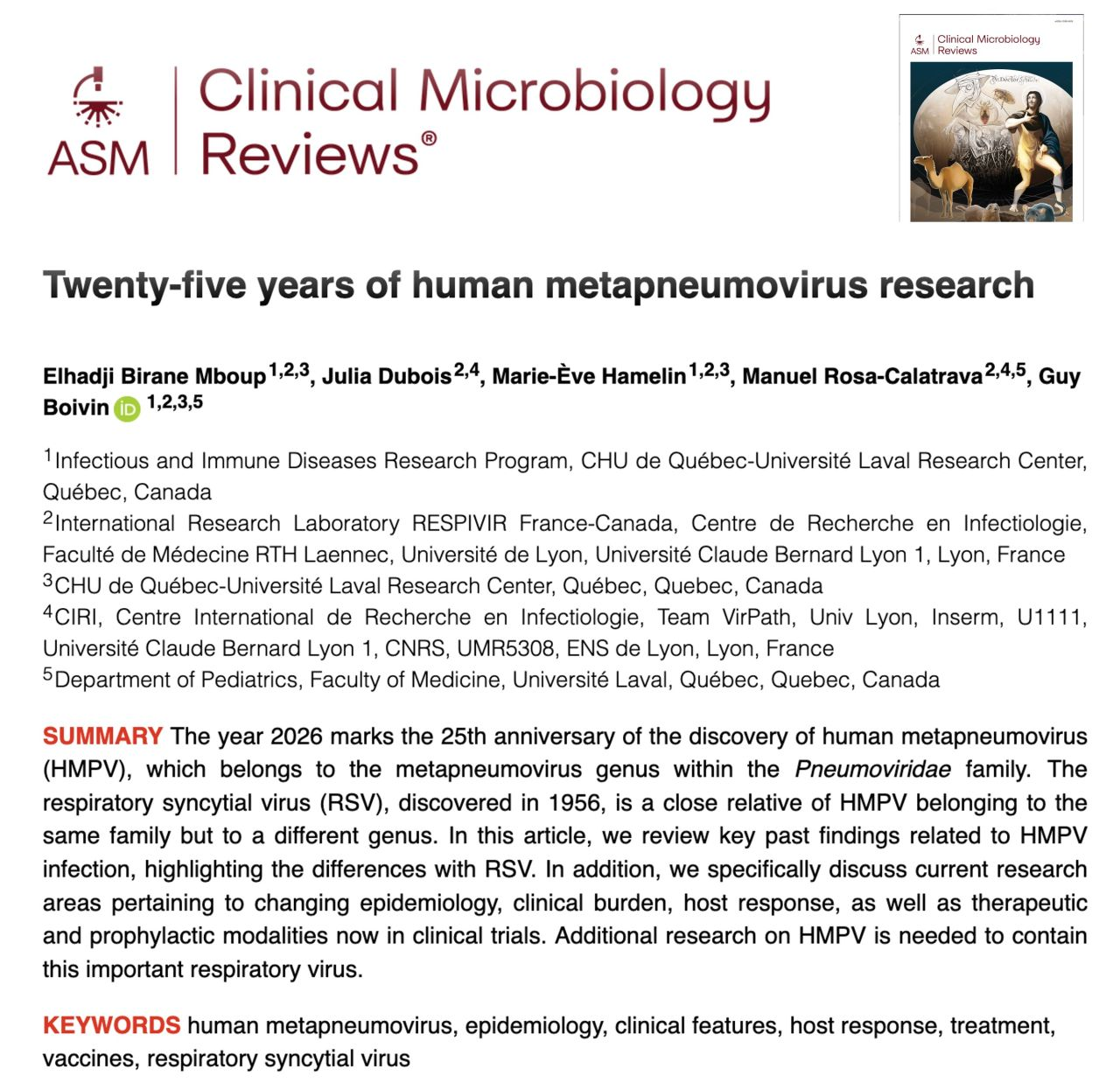
Twenty-five years after its discovery, our understanding of HMPV has advanced dramatically. But one fundamental challenge remains:
HMPV is still significantly underestimated, and accurate diagnosis remains essential to closing the gap between disease burden and clinical recognition.
I. A Globally Underestimated Respiratory Disease Burden
HMPV belongs to the Metapneumovirus genus within the Pneumoviridae family. Although it is closely related to RSV, it represents a distinct viral genus and is now recognized as an important cause of acute respiratory infections worldwide.
HMPV is estimated to be detected in approximately 2%–6% of patients with acute respiratory illness, with a particularly significant impact on young children and older adults.
The burden among children under five is especially notable. In 2018, HMPV was estimated to account for approximately 1.1 million acute lower respiratory infections in children under five, leading to around 500,000 hospitalizations and an estimated 11,300 deaths. Nearly 58% of these hospitalizations occurred in infants younger than one year.
Key epidemiological facts
Children: Serological evidence indicates that most children have been infected with HMPV by the age of five, highlighting how widespread exposure is early in life.
Older adults: Adults aged 65 years and above are also vulnerable to severe HMPV disease, particularly those with underlying conditions or compromised respiratory health.
Co-infections: HMPV is frequently detected alongside other respiratory pathogens. Reported co-infection rates range from approximately 16.7% to 45.9%, with adenovirus, RSV, and bocavirus among the commonly reported co-detected pathogens.
These figures highlight an important point: HMPV is not a rare respiratory pathogen—it is a common but often under-recognized one.
II. Recent Activity: A Wake-Up Call for HMPV Surveillance
Recent increases in HMPV activity across different regions have brought renewed attention to the virus and its clinical significance.
China: From late 2024 into early 2025, northern China experienced increased HMPV activity. HMPV accounted for approximately 6.2% of positive respiratory tests and 5.4% of hospitalized respiratory cases in reported surveillance data.
United States: Between January and March 2025, HMPV-associated pediatric hospitalization rates increased by approximately 17% compared with the same period two years earlier.
United Kingdom: During the 2024–2025 respiratory season, HMPV positivity increased from approximately 2.3%–3.8% early in the season to 11.4% by week 14.
India: Approximately 90 HMPV cases had been reported by March 2025.
The clinical impact is not limited to children. In a French study of hospitalized adults with respiratory illness, HMPV was detected in approximately 5% of cases. Among HMPV-positive patients, around one-third developed pneumonia, approximately one-fifth experienced acute heart failure, and mortality reached about 4%.
These observations reinforce the need to look beyond seasonal case counts.
HMPV surveillance is also a window into the changing landscape of respiratory disease.
III. Why HMPV Diagnostics Matter: Closing a Therapeutic Gap
Perhaps one of the most important challenges associated with HMPV is the lack of pathogen-specific treatment and preventive options.
There is currently no globally approved HMPV-specific antiviral therapy or vaccine.
Clinical management therefore remains primarily supportive, including rest, hydration, and antipyretics. Patients with severe disease may require oxygen therapy, respiratory support, or mechanical ventilation.
When pathogen-specific treatment is unavailable, diagnostic accuracy becomes even more important.
Rapid identification can help clinicians:
- distinguish HMPV from other respiratory pathogens with similar symptoms;
- identify potential co-infections;
- support appropriate patient management;
- reduce unnecessary antibiotic use;
- improve infection-control decisions; and
- support more efficient allocation of healthcare resources.
In other words, when treatment options are limited, knowing what is causing the infection becomes even more valuable.
IV. From Clinical Diagnosis to Genomic Surveillance
To address the diagnostic and surveillance challenges associated with HMPV, Macro & Micro-Test offers a portfolio spanning rapid clinical testing, multiplex molecular diagnostics, and whole-genome enrichment for research and surveillance applications.
A. Clinical Diagnostics
Macro & Micro-Test provides HMPV detection solutions covering both rapid antigen testing and multiplex nucleic acid detection.
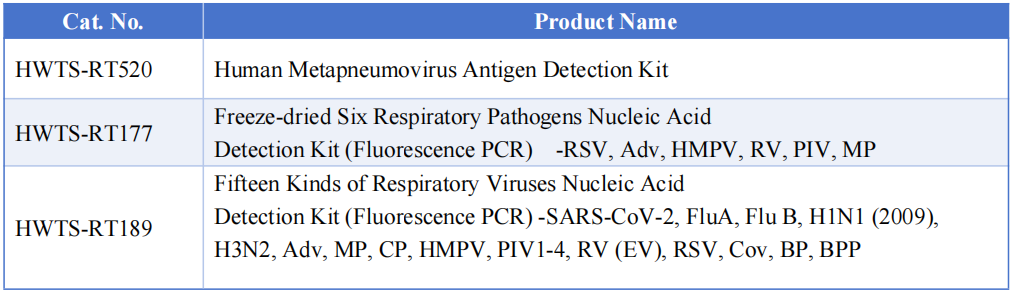
Rapid antigen detection uses a latex-based immunochromatographic method for qualitative detection of HMPV antigen.
It supports:
- Oropharyngeal, nasal, and nasopharyngeal swab samples
- 15–20 minute results
- Storage at 4–30°C
- 24-month shelf life
- No additional instrumentation required
This makes the assay well suited to primary care, outpatient, and point-of-care testing scenarios, where rapid results and operational simplicity are especially important.
Multiplex Molecular Detection for situations where clinical symptoms alone cannot reliably distinguish among respiratory pathogens. Rather than relying solely on clinical symptoms—which can be difficult to distinguish among HMPV, RSV, influenza, and other respiratory infections— the multiplex testing can provide a broader pathogen profile from a single testing workflow. This is particularly relevant during seasonal peaks, when co-infections and overlapping clinical presentations can complicate diagnosis.
B. Genomic Surveillance: Moving Beyond Detection
Clinical diagnosis answers one important question: “Is HMPV present?”
Genomic surveillance can help answer a much broader set of questions: “Which lineage is circulating? How is the virus evolving? Where did an outbreak originate? And how are transmission chains connected?”
For research, epidemiological surveillance, and outbreak investigation, Macro & Micro-Test offers whole-genome enrichment solutions based on multiplex amplification and probe-capture technologies.
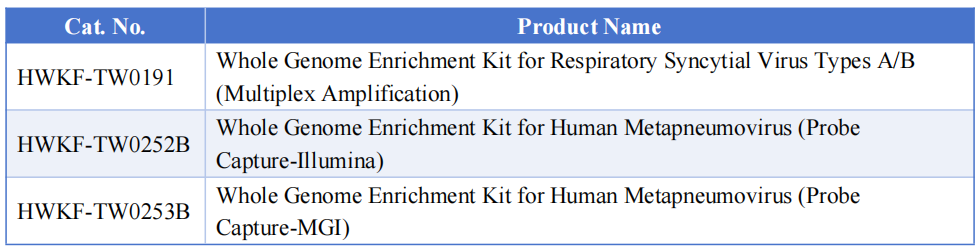
These RSV and HMPV whole-genome enrichment solutions are designed to facilitate recovery of genomic sequences for downstream sequencing and analysis.
Potential applications include:
- RSV/HMPV genetic evolution analysis
- Variant and lineage surveillance
- Outbreak investigation
- Transmission-chain analysis
- Molecular epidemiology
- Research and genomic surveillance
V. 25 Years Later: From Discovery to Response
Twenty-five years after its discovery, HMPV is no longer a forgotten virus—but significant gaps in diagnosis, treatment, and surveillance remain. With no approved HMPV-specific antiviral therapy or vaccine, rapid and accurate detection is more important than ever.
From time-consuming virus culture to rapid antigen testing, multiplex PCR, and whole-genome sequencing, diagnostic technology is transforming how we detect, differentiate, and track HMPV.
Detect. Differentiate. Track.
Macro & Micro-Test-Precision Diagnosis Shapes a Better Life.
With 400+ products spanning molecular diagnostics, immunology, POCT, and sequencing, Macro & Micro-Test provides integrated solutions for clinical diagnosis and genomic surveillance across global markets.
25 years after HMPV was discovered, precision diagnosis is helping turn awareness into action.
Post time: Sep-08-2026