
World AMR Awareness Week 2026 | 18–24 November
1. A New Era of Cancer Treatment
Cancer treatment is entering an increasingly precise and personalized era.
Advances in molecularly targeted therapies, immunotherapy, antibody-drug conjugates (ADCs) and cell-based therapies are expanding treatment options for patients with different types of cancer. In its 2026 Cancer Progress Report, the American Association for Cancer Research (AACR) highlighted that the US FDA approved 11 new anticancer therapeutics between July 2025 and June 2026. These included a new targeted therapy for a rare brain tumor, the first approved proteolysis-targeting chimera (PROTAC) for breast cancer, an immune checkpoint inhibitor for ovarian cancer, and a CAR T-cell therapy for marginal zone lymphoma.[1]
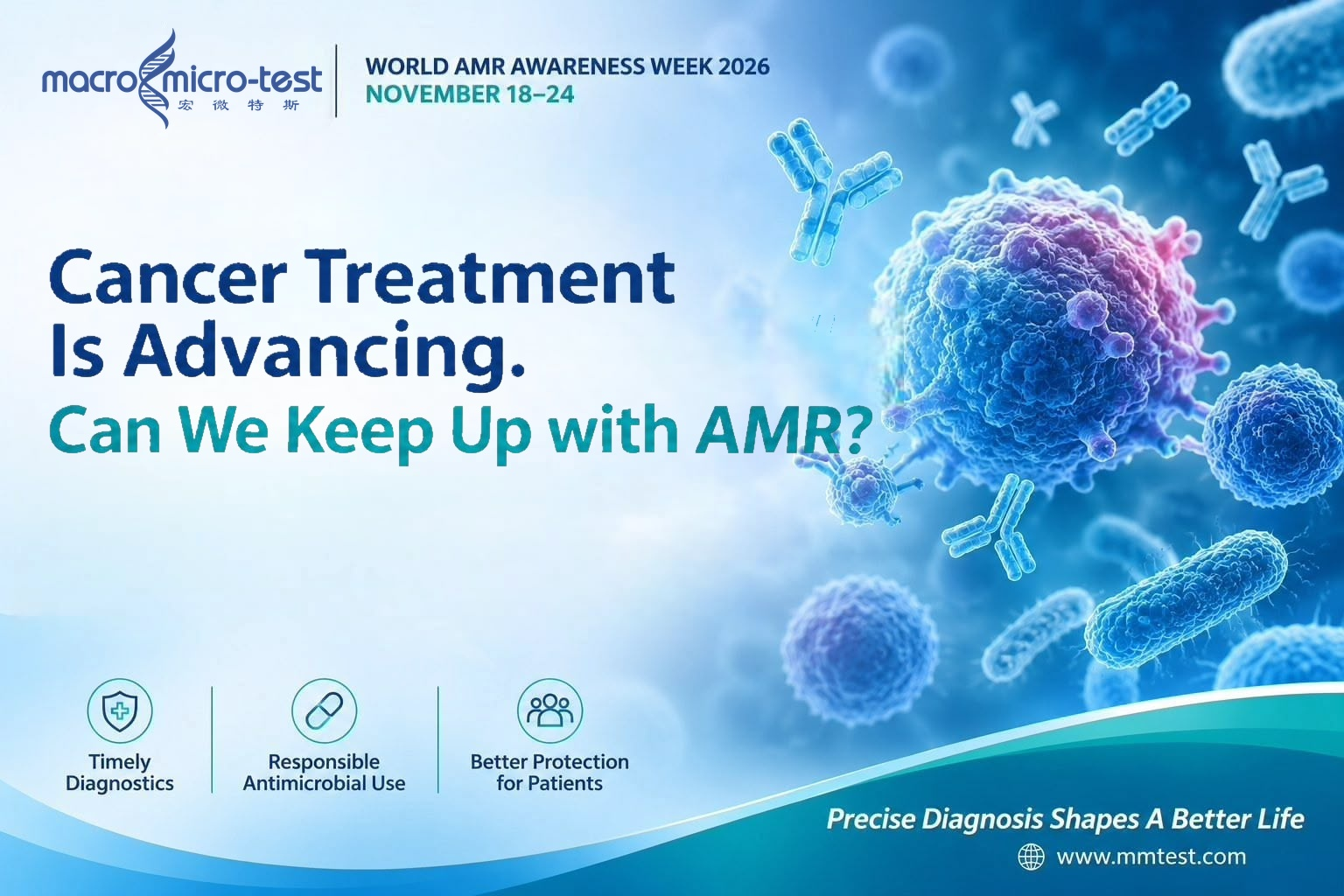
These developments are transforming cancer care and offering new possibilities for patients. However, the effectiveness of advanced cancer treatment also depends on managing complications along the treatment journey — particularly infections.
2. Antimicrobial Resistance: A Growing Challenge in Cancer Care
Cancer patients are often more vulnerable to bacterial infections due to disease-related immune dysfunction and treatment-associated immunosuppression. Chemotherapy, stem cell transplantation and certain immunotherapies can further increase susceptibility to serious infections.
When these infections involve antimicrobial-resistant (AMR) pathogens, treatment becomes more complicated. Limited effective antibiotic options can increase the risk of complications, prolong hospitalization and potentially delay or interrupt cancer treatment.
The global AMR burden highlights the urgency of this challenge:
- 4.71 million deaths were associated with bacterial AMR worldwide in 2021, including 1.14 million deaths directly attributable to resistance.[2]
- 1 in 6 laboratory-confirmed bacterial infections worldwide were resistant to antibiotics in 2023, according to WHO estimates.[2]
- A 2025 systematic review in The Lancet Oncology, covering 274 studies across 52 countries, found that 35% of bacterial infections involving seven WHO priority pathogens in patients with haematological malignancies involved resistant bacteria.[3]
The same review reported particularly high resistance prevalence for third-generation cephalosporin-resistant Enterobacterales (44%), methicillin-resistant Staphylococcus aureus (MRSA, 43%) and vancomycin-resistant enterococci (41%). Furthermore, 65% of the 81 studies reporting mortality found higher mortality associated with AMR infections.[3]
Additional evidence comes from a multicentre US study published in The Lancet Oncology. Analysing more than 1.65 million bacterial isolates from 198 outpatient healthcare settings, researchers found that AMR rates for several key pathogens were up to three times higher in isolates from patients with cancer than in those without cancer.[4]
Together, these findings highlight the importance of addressing AMR as part of comprehensive cancer care.
3. Timely Diagnostics: Supporting Better Infection Management
When infections occur during cancer treatment, identifying the causative pathogens and relevant resistance markers is an important step toward informed clinical decision-making.
Rapid and accurate diagnostic testing can help provide essential information for infection assessment, support antimicrobial stewardship and strengthen infection prevention and control.
In particular, detecting major carbapenemase genes and clinically important resistant bacteria can provide valuable information when managing infections involving both Gram-negative and Gram-positive pathogens.
4. Macro & Micro-Test: AMR Diagnostic Solutions
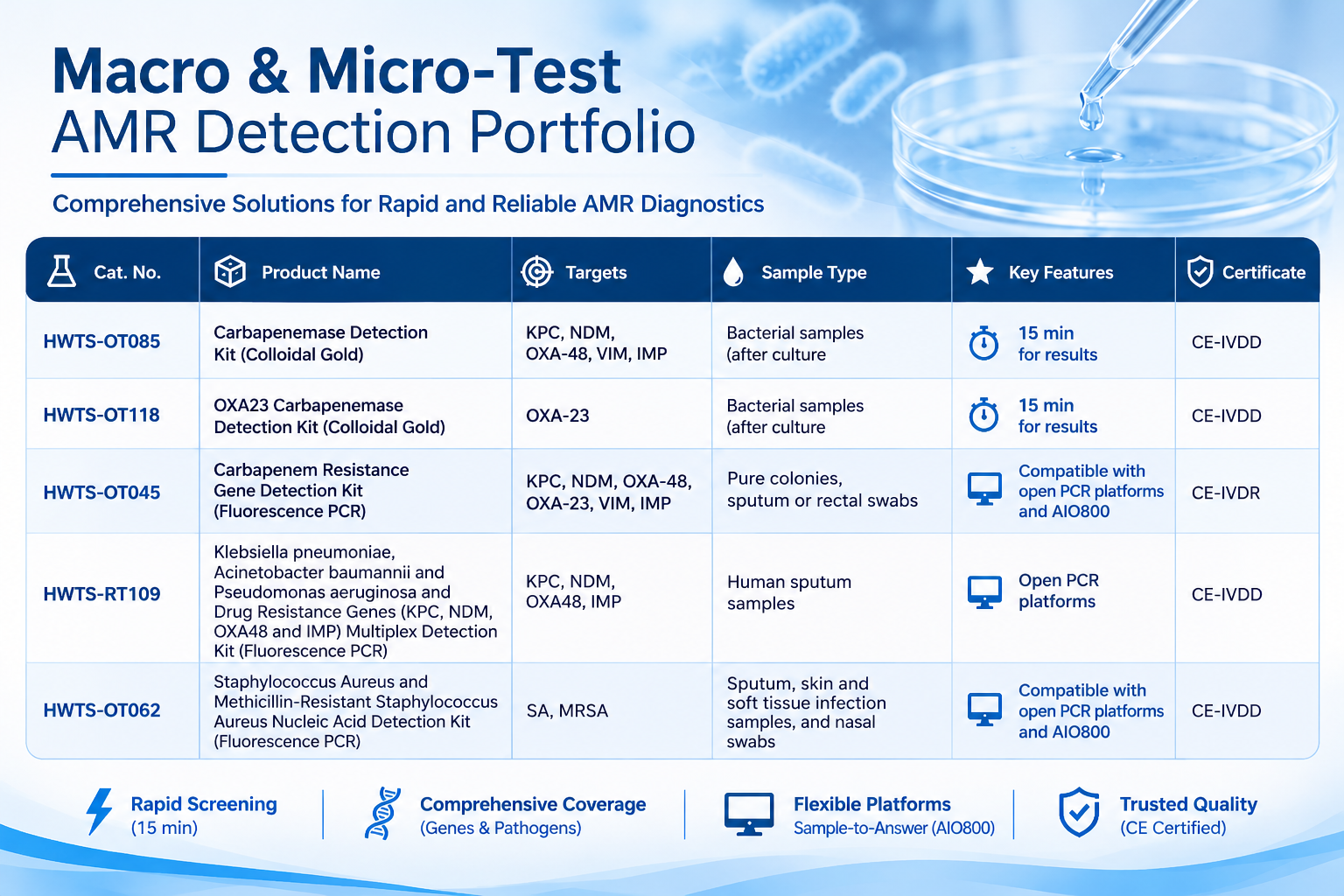
Macro & Micro-Test offers a portfolio of AMR diagnostic solutions designed to address different testing needs:
Rapid Carbapenemase Screening
Colloidal gold-based detection of five major carbapenemases (KPC, NDM, OXA-48, VIM and IMP), alongside a dedicated OXA-23 detection kit. Both provide results in approximately 15 minutes using bacterial samples after culture.
Multiplex Carbapenem Resistance Gene Detection
A CE-IVDR-certified Fluorescence PCR assay covering six key resistance genes: KPC, NDM, OXA-48, OXA-23, VIM and IMP. It supports pure colonies, sputum and rectal swab samples without prior culture.
Combined Pathogen and Resistance Gene Detection
A multiplex Fluorescence PCR assay simultaneously detecting three important Gram-negative pathogens — Klebsiella pneumoniae, Acinetobacter baumannii and Pseudomonas aeruginosa — together with four carbapenem resistance genes: KPC, NDM, OXA-48 and IMP. The assay is CE-IVDD certified.
The molecular assays is compatible with conventional open fluorescence PCR platforms and the integrated Sample-to-Answer workflow on AIO800 molecular POCT system.
Staphylococcus aureus and MRSA Detection
A molecular assay for simultaneous detection of Staphylococcus aureus (SA) and methicillin-resistant S. aureus (MRSA), supporting sputum, skin and soft tissue infection samples, and nasal swabs.
The molecular assays offer compatibility with conventional open fluorescence PCR platforms and the integrated Sample-to-Answer workflow on AIO800 molecular POCT system.
5. Protecting Progress in Cancer Care
The future of cancer treatment depends not only on developing more effective therapies, but also on ensuring that patients can safely benefit from them.
This World AMR Awareness Week, let’s place infection management and antimicrobial resistance prevention firmly within the broader conversation on cancer care.
Timely diagnostics. Responsible antimicrobial use. Effective infection prevention and control.
Together, these efforts are essential to protecting vulnerable patients and supporting the continued progress of modern cancer treatment.
Macro & Micro-Test
Precise Diagnosis Shapes A Better Life
References:
[1] AACR Cancer Progress Report 2026 – Executive Summary
[2] WHO – Antimicrobial Resistance, 2026
Post time: Nov-23-2026