
EML4-ALK Fusion Testing in NSCLC: Guideline-
Recommended Molecular Diagnosis for Precision Therapy
Lung cancer remains the leading cause of cancer-related mortality worldwide, with non-small cell lung cancer (NSCLC) accounting for approximately 85% of all lung cancer cases. Over the past decade, molecular profiling has transformed the management of NSCLC, allowing clinicians to identify actionable driver alterations and select targeted therapies that significantly improve patient outcomes.
Among these actionable biomarkers, ALK (Anaplastic Lymphoma Kinase) gene rearrangements, particularly EML4-ALK fusion variants, represent one of the most clinically important oncogenic drivers. Accurate detection of ALK fusion mutations is therefore essential for selecting appropriate ALK tyrosine kinase inhibitor (TKI) therapy and supporting personalized treatment decisions.
Macro & Micro-Test’s Human EML4-ALK Fusion Gene Mutation Detection Kit is designed to provide rapid, sensitive, and reliable qualitative detection of the most clinically relevant EML4-ALK fusion variants in FFPE tissue specimens.
Understanding EML4-ALK Fusion
The EML4-ALK fusion gene results from a chromosomal inversion on chromosome 2, joining portions of the EML4 gene with the kinase domain of ALK. This fusion protein exhibits constitutive kinase activation, driving uncontrolled cellular proliferation and tumor development.
ALK rearrangements occur in approximately 3–7% of NSCLC patients, most commonly in:
- Lung adenocarcinoma
- Younger patients
- Never or light smokers
Multiple fusion variants have been identified, with several accounting for the vast majority of clinically relevant ALK-positive NSCLC.
Why ALK Fusion Testing Matters
ALK-positive NSCLC has become one of the best examples of precision oncology.
Patients harboring ALK rearrangements can benefit substantially from targeted ALK inhibitors, including second- and third-generation therapies that offer:
- Higher response rates
- Longer progression-free survival
- Improved central nervous system (CNS) penetration
- Better quality of life compared with conventional chemotherapy
Because treatment eligibility depends on molecular confirmation, accurate laboratory testing is an essential first step before initiating targeted therapy.
International Guidelines Recommend ALK Testing
Major international oncology organizations consistently recommend routine ALK testing for eligible patients with advanced NSCLC.
NCCN Guidelines
The National Comprehensive Cancer Network (NCCN) recommends comprehensive molecular biomarker testing—including ALK rearrangement testing—for patients with advanced or metastatic non-squamous NSCLC before first-line systemic therapy.
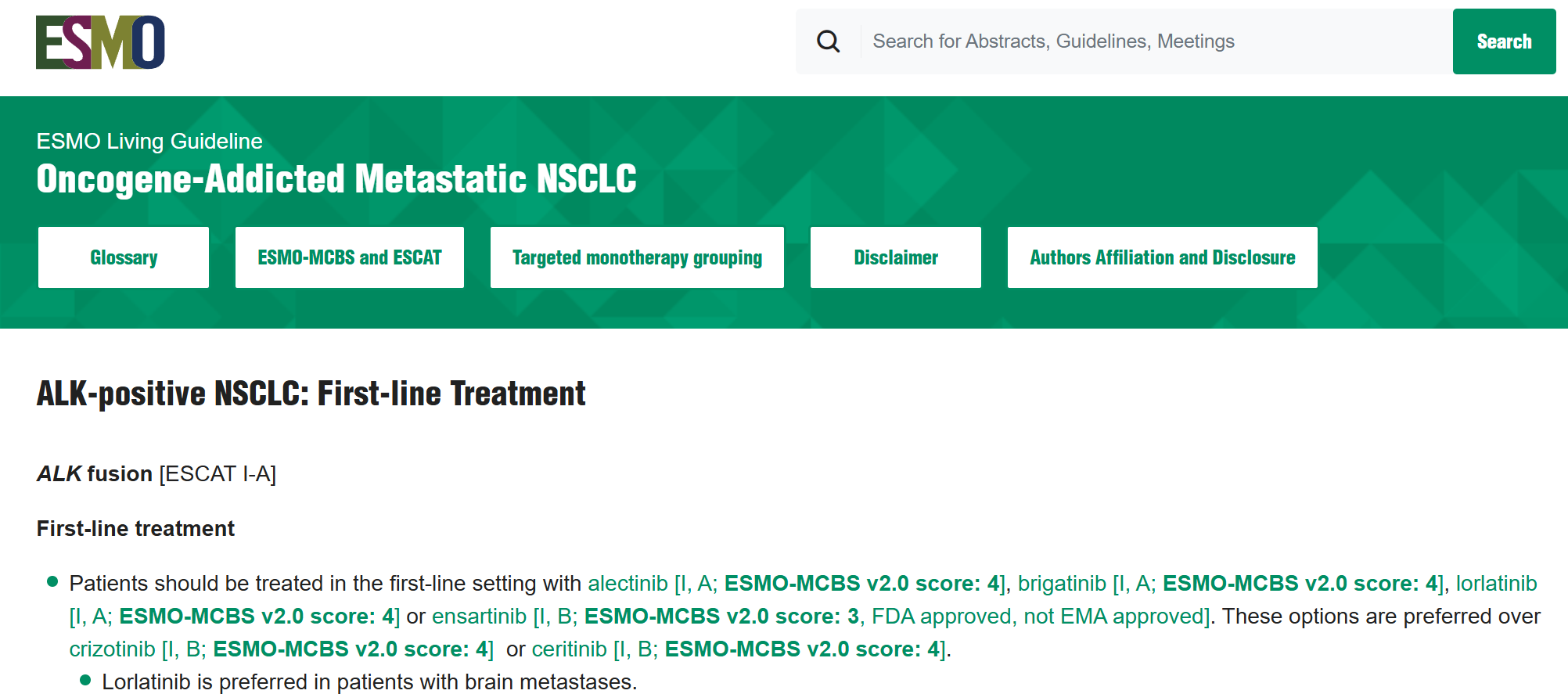
ESMO Clinical Practice Guidelines
ESMO recommends obtaining molecular results before initiating first-line systemic therapy, allowing eligible patients to receive targeted treatment.
FFPE Sample Compatibility
Validated for:
- FFPE tissue
- FFPE tissue sections
Compatible with routine pathology workflows without requiring fresh tissue samples.
Broad Instrument Compatibility
Validated on multiple mainstream real-time PCR platforms, including:
CAP/IASLC/AMP Molecular Testing Guideline
The joint guideline from the College of American Pathologists (CAP), International Association for the Study of Lung Cancer (IASLC), and Association for Molecular Pathology (AMP) recommends that:All patients with advanced lung adenocarcinoma undergo ALK testing.
Detection Principle
Macro & Micro-Test’s Human EML4-ALK Fusion Gene Mutation Detection Kit utilizes real-time fluorescence PCR technology to qualitatively detect clinically significant EML4-ALK fusion transcripts.
The assay employs fusion-specific primers and fluorescent probes targeting known EML4-ALK rearrangement breakpoints. During PCR amplification, fluorescence signals generated by target-specific probes are monitored in real time, enabling sensitive and specific identification of ALK fusion variants.
The assay is optimized for RNA extracted from formalin-fixed paraffin-embedded (FFPE) tissue or tissue sections, making it suitable for routine pathological specimens commonly used in molecular diagnostics.
Product Highlights
Broad Variant Coverage
The kit qualitatively detects 12 clinically relevant EML4-ALK fusion variants, including: Variant 1, 2, 3a, 3b, 4, 5a, 5b, 5’, 6, 7, 8a, 8b
These variants represent the most frequently reported EML4-ALK fusion types in NSCLC.
High Analytical Sensitivity
- Limit of Detection (LoD): 20 copies
- Enables reliable detection of low-abundance fusion transcripts in clinical specimens.
- Applied Biosystems™ 7500 Real-Time PCR System
- Applied Biosystems™ 7500 Fast Real-Time PCR System
- QuantStudio™ 5 Real-Time PCR System
- SLAN-96P Real-Time PCR System
- LightCycler® 480 Real-Time PCR System
- LineGene 9600 Plus Real-Time PCR Detection System
- MA-6000 Real-Time Quantitative Thermal Cycler
- Bio-Rad CFX96 Real-Time PCR System
- Bio-Rad CFX Opus 96 Real-Time PCR System
This broad compatibility allows laboratories to integrate the assay into existing PCR workflows without additional instrumentation.
Clinical Benefits
The Human EML4-ALK Fusion Gene Mutation Detection Kit supports clinical laboratories by providing:
- Detection of 12 major EML4-ALK fusion variants
- High sensitivity with a 20-copy LoD
- Compatibility with routine FFPE specimens
- Flexible deployment across multiple PCR platforms
- Reliable molecular evidence for precision oncology
Timely identification of ALK-positive patients helps clinicians make informed treatment decisions and supports the implementation of guideline-recommended targeted therapy.
Conclusion
As precision medicine continues to reshape the treatment landscape of NSCLC, comprehensive biomarker testing has become an indispensable component of patient management. International guidelines consistently recognize ALK fusion testing as a standard-of-care molecular assay for identifying patients who may benefit from ALK-targeted therapies.
Macro & Micro-Test’s Human EML4-ALK Fusion Gene Mutation Detection Kit combines broad variant coverage, high analytical sensitivity, compatibility with routine FFPE specimens, and flexible instrument support to deliver dependable molecular testing for clinical laboratories. By enabling accurate detection of clinically significant EML4-ALK fusion variants, the assay helps facilitate precision diagnosis and supports personalized treatment strategies for patients with NSCLC.
Post time: Aug-14-2026