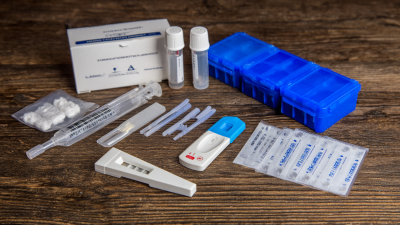
Enterovirus diagnostic kit suppliers are really catching more attention these days, especially as hospitals, labs, and research centers look for quicker results during outbreaks. These kits are crucial for detecting enterovirus RNA or viral parts in samples like cerebrospinal fluid, throat swabs, stool, or respiratory samples. But here’s the thing—speed isn’t everything. You also need to consider how sensitive the test is, whether it works well with different kinds of samples, how reliable the internal controls are, and if the validation data is transparent and solid.
Dr. Steve Oberste, a well-known enterovirus research expert at the CDC, always stresses a simple but important point: ‘Getting an accurate diagnosis depends on having good specimens, using the right methods, and interpreting the results carefully.’ That’s a lesson that still applies when you’re looking at suppliers like Seegene, BioFire, QIAGEN, and Vircell. They each have different features—things like how many viruses they can detect at once, the workflow, what kind of instruments you need, and their regulatory paperwork. Little details can actually make a big difference. For example, a reliable positive-control system can protect the entire testing process.
This overview takes a closer look at the top Enterovirus Diagnostic Kit suppliers around the world, focusing on real data and practical considerations. We consider how well their tests perform, if they maintain quality standards, the range of applications they cover, the kind of support they offer, and how credible their validation data really is. When buying, it’s also smart to think about your local lab’s capabilities and what you actually need the kit for—because just because a kit looks impressive on paper doesn’t mean it’s the perfect fit for every situation. One thing to keep in mind: comparing different suppliers can be tricky because they might use different methods or study designs, so direct rankings aren’t always perfect. Always double-check with independent tests before making a decision. And don’t assume that the biggest company is always the best choice. Sometimes, it’s the little things—like stable reagents, clear instructions, and consistent lot performance—that make all the difference in reliability and trustworthiness.
Top Enterovirus Diagnostic Kit Suppliers Worldwide
Enterovirus testing covers a wide biological landscape. The commonly cited scope includes 15 species and more than 300 recognized types, spanning enteroviruses and rhinoviruses. ICTV taxonomy updates show that classification can change as sequencing improves. The number looks precise, but it is not permanent. This matters when laboratories compare diagnostic kits.
A broad panel may detect Enterovirus A–D, rhinovirus groups, or selected targets such as EV-D68. WHO laboratory guidance emphasizes molecular testing, internal controls, and contamination prevention. CDC surveillance reports also show that enterovirus activity can shift by season, age group, and clinical setting. In practice, suppliers should provide clear analytical sensitivity data, inclusivity studies, and cross-reactivity results. A kit that performs well on one genotype may miss another. That uncomfortable gap deserves attention.
Tips: Check whether the kit detects species or only selected types. Review limit-of-detection data for respiratory and cerebrospinal fluid samples. Confirm extraction compatibility before purchasing. Ask for recent external quality-assessment results, not only marketing claims. WHO and national surveillance reports can help laboratories match test coverage with local circulation patterns. Classification remains imperfect, and diagnostic decisions should allow periodic panel review.
Top Enterovirus Diagnostic Kit Suppliers Worldwide
Clinical demand remains substantial because the U.S. records an estimated 10–15 million enterovirus infections annually, according to the Centers for Disease Control and Prevention (CDC). Most cases are mild, but some patients develop meningitis, encephalitis, myocarditis, or neonatal sepsis. The seasonal pattern is clear. More samples arrive in late summer and early autumn, creating pressure on hospital laboratories.
This estimate represents infections, not confirmed laboratory diagnoses. That distinction matters. Many patients recover without testing, while severe cases need rapid molecular confirmation. CDC surveillance reports show that enterovirus detection varies by serotype, age group, and region. In practice, diagnostic kits must support sensitive RNA detection, clear internal controls, and dependable performance across respiratory, stool, and cerebrospinal fluid specimens. False reassurance remains a serious weakness.
Worldwide suppliers are responding to demand for multiplex PCR panels, standalone molecular assays, and faster near-patient platforms. The World Health Organization emphasizes validated laboratory procedures, quality assurance, and biosafety in infectious-disease testing. Procurement teams should examine clinical evidence, external quality assessment results, specimen compatibility, and turnaround time rather than marketing claims alone. Cost also matters, especially during seasonal surges. Yet the 10–15 million figure is an estimate, and it may understate infections missed outside formal healthcare settings.
| Procurement Dimension | Clinical or Market Data | Typical Diagnostic Kit Requirement | Common Specimen Types | Typical Laboratory Turnaround | Global Relevance |
|---|---|---|---|---|---|
| Estimated U.S. clinical demand | Approximately 10–15 million enterovirus infections occur annually in the United States. | High-volume, scalable molecular testing capacity with dependable reagent availability. | Respiratory specimens, stool, rectal swabs, cerebrospinal fluid, vesicle swabs, and blood when clinically indicated. | Usually same day to several days, depending on laboratory workflow. | Demand is concentrated in outpatient, pediatric, emergency, and hospital laboratory settings. |
| Primary detection technology | Reverse-transcription polymerase chain reaction (RT-PCR) and other nucleic-acid amplification tests are widely used for rapid detection. | Analytical inclusivity across clinically relevant non-polio enteroviruses, internal controls, contamination safeguards, and validated extraction compatibility. | Most commonly cerebrospinal fluid for suspected meningitis or encephalitis; respiratory or stool specimens for other syndromes. | Approximately 1–6 hours of instrument time for many molecular workflows; total reporting time may be longer. | Suitable for centralized laboratories and decentralized molecular testing programs. |
| Central nervous system testing | Enteroviruses are an important viral cause of aseptic meningitis, particularly among children and young adults. | High sensitivity in cerebrospinal fluid, low sample-volume requirements, and clear interpretation of positive, negative, and invalid results. | Cerebrospinal fluid collected by lumbar puncture. | Same day is clinically valuable for supporting antimicrobial stewardship and patient management. | Relevant to emergency departments, pediatric hospitals, neurology services, and reference laboratories. |
| Respiratory and pediatric testing | Some enteroviruses, including enterovirus D68, can cause respiratory illness and may overlap clinically with other respiratory infections. | Multiplex respiratory panels or dedicated enterovirus assays with appropriate respiratory-virus differentiation. | Nasopharyngeal swabs, nasal swabs, or other validated respiratory specimens. | Approximately 1–24 hours after specimen receipt, depending on the platform. | Important for pediatric hospitals, outbreak investigations, and seasonal respiratory testing. |
| Enterovirus surveillance and typing | Molecular typing is used when epidemiological investigation, public-health surveillance, or poliovirus exclusion is required. | Broad screening followed by confirmatory typing or sequencing capability; strong specimen traceability and quality controls. | Stool, rectal swabs, respiratory specimens, cerebrospinal fluid, and other specimens selected by public-health protocols. | Screening may be completed within one working day; typing or sequencing commonly requires additional laboratory time. | Particularly relevant to national reference laboratories and public-health networks. |
| Alternative culture-based methods | Cell culture can support virus isolation but is generally slower and more labor-intensive than molecular detection. | Validated cell lines, sterile consumables, positive and negative controls, and confirmatory identification procedures. | Stool, respiratory specimens, cerebrospinal fluid, and vesicle material when clinically appropriate. | Typically several days and sometimes longer, depending on viral growth and confirmation requirements. | More common in reference, research, and specialized surveillance laboratories than in rapid clinical diagnosis. |
| Seasonal demand pattern | In temperate regions, non-polio enterovirus activity commonly increases during summer and early autumn, although circulation occurs year-round. | Seasonal inventory planning, surge capacity, stable cold-chain or room-temperature storage as specified, and adequate expiry periods. | Specimen selection varies with the clinical syndrome and local surveillance protocol. | Demand may increase rapidly during seasonal clusters or institutional outbreaks. | Suppliers serving both temperate and tropical markets need flexible forecasting and distribution coverage. |
| Quality and regulatory expectations | Clinical laboratories generally require documented analytical performance, lot traceability, controls, instructions for use, and applicable regulatory authorization. | Evidence for analytical sensitivity, specificity, precision, interference, inclusivity, stability, and clinical performance. | Only specimen types explicitly validated in the product documentation should be used. | Release and reporting time must align with the intended-use claim and laboratory quality system. | Requirements differ by jurisdiction, including applicable U.S., European, and other national regulatory frameworks. |
| Key purchasing criteria | Clinical laboratories typically compare performance, workflow fit, service support, supply continuity, and total cost of testing. | Instrument compatibility, reagent stability, open or closed workflow, throughput, controls, technical support, and continuity of supply. | Validated specimen matrix coverage should match the laboratory’s patient population and testing menu. | Priority is usually placed on predictable reporting time and low invalid-test rates. | These criteria apply to hospital laboratories, commercial laboratories, government facilities, and reference centers worldwide. |
Top Enterovirus Diagnostic Kit Suppliers Worldwide
Enterovirus diagnostic kits increasingly combine RT-PCR, multiplex panels, and antigen tests. Each method answers a different clinical question. RT-PCR detects viral genetic material with strong analytical sensitivity, especially when the sample contains limited virus. It can support early decisions, but poor collection technique may still produce false negatives. Experienced laboratories therefore assess specimen type, timing, controls, and extraction quality together.
Multiplex panels test several respiratory or neurological pathogens in one run. This can save time when symptoms overlap, although broader testing may increase costs and confusing results. Antigen tests are faster and simpler. They may support screening during high-demand periods, yet their sensitivity can vary with viral load and sampling depth. Suppliers should provide clear instructions, validation data, storage conditions, and technical support. Independent verification remains important.
Tips: Match the platform to the clinical setting. Check internal controls on every run. Review invalid rates, not only positive results. Train staff with realistic sample handling exercises. Do not treat a negative rapid antigen result as final when symptoms remain concerning. Even advanced systems need careful interpretation.
Global enterovirus diagnostic kit suppliers vary in manufacturing depth, validation data, and regional service capacity. Experienced manufacturers usually offer molecular or antigen-based kits for clinical laboratories. Their profiles should explain specimen types, detection targets, storage temperatures, and expected turnaround times. Clear instructions matter. A crowded package insert can still confuse users.
Reliable suppliers provide evidence from analytical sensitivity, specificity, interference, and reproducibility studies. They should also describe lot release testing and traceability procedures. Quality certifications and regulatory documentation help laboratories assess credibility, but certificates alone are not enough. Buyers should examine study populations, control materials, and performance across different enterovirus strains. Results from one region may not represent every hospital setting.
Regional market coverage depends on more than distribution offices. Suppliers serving Asia, Europe, the Middle East, Africa, and the Americas may need local language support, import coordination, and stable cold-chain logistics. In practice, a regional contact who answers within hours can prevent delayed testing. Some suppliers list many countries but provide limited technical training. That gap deserves attention. No profile is complete without checking replacement policies, instrument compatibility, and post-sale support. A practical comparison should record delivery time, training format, control availability, and the supplier’s response to invalid results.
Top Enterovirus Diagnostic Kit Suppliers Worldwide
Performance should be judged by evidence, not catalogue claims. Published multicenter evaluations commonly report molecular enterovirus assays with 95%–99% sensitivity and 97%–100% specificity. Results vary by specimen type, viral load, and patient age. Cerebrospinal fluid remains challenging because viral concentrations can be low.
Limit of detection is equally important. Under CLSI EP17-A2 principles, suppliers should verify LoD using multiple low-concentration replicates, not one successful run. Strong assays often detect approximately 10–100 copies per reaction, but copy numbers are not directly comparable across platforms. A 1-log difference can change clinical interpretation. Small details matter.
Turnaround time affects isolation decisions and hospital flow. Automated molecular systems may provide results in 45–120 minutes, while batch workflows can require several hours. WHO laboratory guidance emphasizes documented controls, traceability, and external quality assessment. A supplier reporting only “over 98% accuracy” gives too little information. Ask for confidence intervals, invalid rates, inclusivity data, and separate results for cerebrospinal fluid, stool, and respiratory samples. The evidence may look impressive, yet transport delays or weak extraction can erase the claimed advantage. Performance tables are useful, but they are not the laboratory.
For worldwide enterovirus diagnostic kit suppliers, regulatory evidence should guide every purchasing decision. ISO 13485 confirms a controlled quality management system for design, production, and corrective actions. It does not prove clinical performance by itself. The European CE-IVD pathway now operates under the In Vitro Diagnostic Regulation, with stronger clinical evidence and post-market surveillance requirements. This matters when a kit claims rapid detection from cerebrospinal fluid or respiratory samples.
FDA 510(k) clearance requires substantial equivalence to a legally marketed device. It is not the same as broad product approval. Suppliers should provide clearance details, intended-use wording, analytical sensitivity, cross-reactivity testing, and lot-release records. MarketsandMarkets estimated the global molecular diagnostics market at approximately USD 15.5 billion in 2023, with continued growth through 2028. That expansion increases supplier choice, but also creates verification pressure. Data from the WHO Laboratory Quality Management System guidance supports documented competency, traceability, and internal quality controls. Small gaps remain common. Some technical files look complete, yet omit specimen stability under real transport conditions. Procurement teams should compare claimed limit of detection with local laboratory workflows, not only brochure figures. Independent verification is still necessary.
Selecting an enterovirus diagnostic kit requires more than comparing detection claims. A laboratory should match expected sample volume with practical throughput. A 96-well format may suit centralized testing, while smaller batches can reduce waste in regional facilities. Ask suppliers for verified run times, hands-on steps, and invalid-rate data from routine use.
Workflow compatibility matters at every bench. The kit should fit existing extraction systems, thermal platforms, software, and contamination-control procedures. Confirm whether internal controls monitor inhibition in each sample. Check reagent stability after opening, storage requirements, and lot-to-lot documentation. Clear instructions help, but real training support matters more when staff turnover is high.
Total cost includes much more than the purchase price. Calculate extraction materials, controls, consumables, instrument time, repeat tests, disposal, and service contracts. A cheaper kit can become expensive when one failed run delays reporting. Request transparent pricing for different order volumes and review delivery performance across regions. Supplier quality systems, technical response times, and traceability should influence the scorecard. Ask for performance evidence from laboratories with similar workloads.
No scorecard is perfect. Actual workflow observation may reveal hidden delays. A pilot evaluation can expose them. Procurement teams should document acceptance criteria before testing, then revise assumptions when results disagree with expectations. Availability can also change quickly, so contingency supply deserves a realistic cost.
Testing may cover 15 species and more than 300 recognized types. Classification changes as genetic sequencing improves. The number is not permanent.
No. Some kits target selected species or types. A kit may perform well on one genotype but miss another. That gap needs review.
Common specimens include respiratory samples, stool, and cerebrospinal fluid. Detection limits may differ between specimen types. Check compatibility before purchasing.
Suppliers should provide analytical sensitivity, inclusivity, and cross-reactivity data. Internal control results are also important. Marketing claims alone are insufficient.
Internal controls help identify extraction or amplification failure. Without them, a negative result may create false reassurance. That risk deserves attention.
Demand often rises in late summer and early autumn. Hospitals may receive more samples during these months. Staffing pressure can appear quickly.
Estimates suggest 10–15 million infections each year. This figure represents infections, not confirmed laboratory diagnoses. Some cases never enter formal healthcare records.
Most infections are mild, but serious disease can occur. Possible outcomes include meningitis, encephalitis, myocarditis, and neonatal sepsis. Rapid molecular confirmation may be needed.
Compare specimen coverage, turnaround time, external quality results, and extraction requirements. Review local seasonal patterns too. The best panel may change.
The global Enterovirus Diagnostic Kit market is expanding as healthcare systems respond to the broad clinical impact of enteroviruses, which include approximately 15 species and more than 300 recognized types. In the United States alone, annual infections are estimated at 10–15 million, creating sustained demand for reliable, rapid, and scalable testing. Current diagnostic options include RT-PCR, multiplex molecular panels, and antigen-based tests, each serving different clinical and laboratory needs.
When evaluating suppliers, laboratories should compare global manufacturing capacity, regional distribution, technical support, and product availability. Key performance metrics include sensitivity, specificity, limit of detection, and turnaround time. Regulatory compliance, such as ISO 13485 quality management, CE-IVD requirements, and FDA 510(k) clearance where applicable, is also essential. Procurement decisions should consider testing throughput, workflow compatibility, instrument integration, training requirements, and total cost, including consumables, maintenance, and staffing.